

Claude Opus 4.8 advertises its uncertainty: Dynamic workflows manage Anthropic subagents
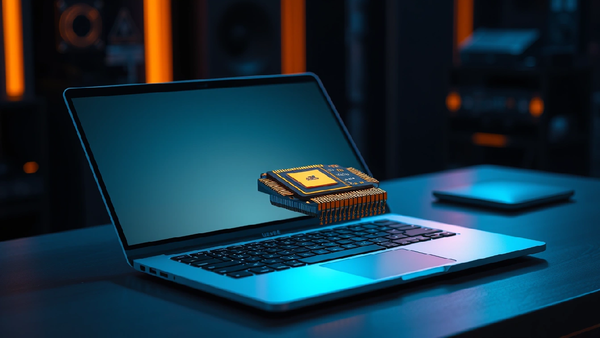
MiniMax M3, the new open-weights champ. Nvidia’s PC superchips. Cosmos 3, an all-modal world/action model. Nvidia’s latest robotics partnerships.
Text-to-image generators that use diffusion or flow-matching typically compose a whole image at once (although they refine the whole image in steps).
AI-driven activity on the internet rose sharply last year, a study shows.
The European Union weakened some provisions of its landmark AI Act and delayed others after businesses and policymakers argued the law made European companies less competitive.
Google’s faster model brings substantive gains at a substantially higher price, part of a rising trend in prices per token.
One of the new, buzzy jobs in Silicon Valley is the AI Forward Deployed Engineer (FDE), an engineer who is embedded within a client organization to help customize solutions, such as building and tuning agentic workflows that suit the client’s particular needs.
The Batch AI News and Insights: One of the new, buzzy jobs in Silicon Valley is the AI Forward Deployed Engineer (FDE), an engineer who is embedded within a client organization to help customize solutions, such as building and tuning agentic workflows that suit the client’s particular needs.
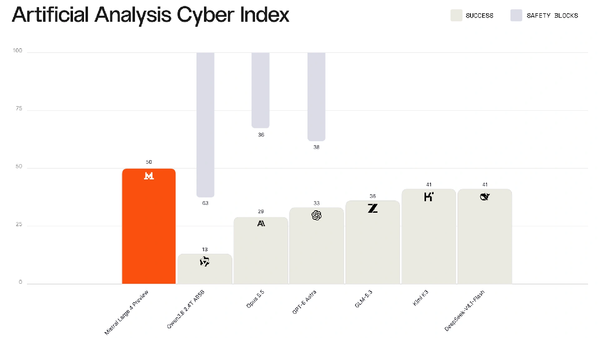
DeepSeek’s permanent V4 price cuts. MAI-Image-2.5, currently third on the Arena Leaderboard. Mythos-1’s remarkable security skills. How MCP will change later this year
Nvidia’s Gated DeltaNet-2, its latest attention alternative. Trump calls off executive order regulating U.S. AI models. Microsoft’s benchmark-topping suite of computer use agents. Cohere’s Command-A+, a local alternative to big cloud AI.
AI agents seem to be increasingly capable of performing economically valuable tasks, but current benchmarks measure this capability only narrowly.
An AI-generated script to bypass two-factor authentication signals a dawning era of industrial-scale cyberattacks, according to a Google report.
Conversational models typically wait for a turn before they respond.