Muse Spark Open leads U.S. open models: Reflection releases weights for Beam, a much-anticipated model
Grok Voice 3.0 leads voice-to-voice benchmarks. Nvidia 3.5 Super VL is faster, more capable than Lightning. DeepSeek-V-4.1-Flash pushes strong update. Meta amends controversial Muse scraping terms.
In today’s edition of Data Points, you’ll learn about our top headlines, and more:
- Grok Voice 3.0 leads voice-to-voice benchmarks
- Nvidia 3.5 Super VL is faster, more capable than Lightning
- DeepSeek-V-4.1-Flash pushes strong update
- Meta amends controversial Muse scraping terms
But first:
Muse Spark Open is one of the top open models in the world
Meta Superintelligence Labs released Muse Spark Open, an 816B-parameter mixture-of-experts model that activates 42B parameters per token, with a 1M-token context window and text, image, video and audio input. Meta says it is the most capable US open-weight model, and Artificial Analysis’ independent benchmarks back that up, giving it a 39 on its Intelligence Index. In Meta’s own comparison table it leads on MCP-Atlas (89.2) and JobBench (61.8) but scores 76.4 on Terminal-Bench 2.1, behind Kimi K3 (85.0), GLM 5.3 (83.9) and Qwen3.8 (82.0). The Muse Model License permits fine-tuning, distillation and redistribution, requires products to display “Built with Muse Spark Open,” and requires hosting providers above $20M in 12-month revenue to sign a separate agreement. OpenRouter lists its price at $1.25 per 1M input tokens and $4.25 per 1M output tokens. For developers building tool-calling agents, this is a self-hostable option that scores highest on MCP-Atlas in Meta’s comparison, but it trails the top China-based open models on coding and overall index scores. (MarkTechPost)
Reflection’s Beam is one of the top open models from the U.S.
Reflection released Beam, its first model, an open weights, text-only model with 501 billion total parameters, 23 billion active, and a 1 million token context window. Artificial Analysis, the benchmarking firm that published the results, gives it a 30 on its Intelligence Index, second among U.S.-based open weights models behind Meta’s Muse Spark Open (39) and tenth among all open weights models. It uses about 26,000 output tokens per task, half of K2 Horizon’s roughly 52,000, and scores 48.5% on AutomationBench-AA but only 3.0% on Terminal-Bench 4.0. On AA-Omniscience it answers 33% of questions correctly but hallucinates on 47%, against 26% for K2 Horizon, and in Reflection’s Mirror CLI harness it scores 28 on the Coding Agent Index, well behind the leaders at 68. For developers choosing a U.S.-origin open weights model, Beam is a token-efficient option for agentic tasks, but its weak terminal results and high hallucination rate argue for testing it on your own workload first. (Artificial Analysis)
Grok Voice 3.0 tops independent tests of voice models
SpaceXAI released Grok Voice 3.0, a hosted speech-to-speech model that ranks first on the Artificial Analysis Speech-to-Speech Index with 86.9, ahead of GPT-Live-1 (83.2) and Gemini 3.8 Live (82.6). It is served as grok-voice-3.0 on the same /v1/realtime WebSocket endpoint at $0.08 per minute, both unchanged from Grok Voice 2.0, and the grok-voice-latest alias already points to it. The API is compatible with OpenAI’s Realtime API, supports 28 voices, SIP for phone calls, and tools including web search, remote MCP servers, and custom functions, with reasoning on by default. The first-place score is not a sweep: on the τ-Voice agentic benchmark it scores 71.6% against GPT-Live-1’s 74.5%, and Artificial Analysis measures 0.81 seconds to first audio, slower than Grok Voice 2.0’s 0.70. Because the endpoint, events, and price carry over, teams on the alias were upgraded automatically, so anyone who needs stable behavior should pin grok-voice-3.0 now, since Grok Voice 2.0 is deprecated. (MarkTechPost)
Nvidia’s vision-language model is the fastest on the planet
Nvidia released Nemotron 3.5 Super VL, an open 120 billion parameter vision-language model for enterprise agents, along with two edge models, Bolt 74B-A9B 24GB (available now) and Bolt E4B 4GB (due Oct. 23). Nvidia says Super VL matches its largest reasoning model on multimodal agentic tasks at about one-fifth the parameter count, and reports up to five times the throughput of comparable models on the Artificial Analysis Intelligence Index; on Artificial Analysis’s indepdendent benchmark tests, it leads all available models on tokens/second. Bolt 74B-A9B uses native 2-bit quantization to fit in 24GB of memory, runs on RTX and DGX Spark hardware, and ships with llama.cpp, Ollama, LM Studio, Unsloth and vLLM support; NVIDIA ranks it first among open models in its class on PinchBench and second on BrowseComp. Super VL ships with open weights, datasets and training recipes, can be fine-tuned through Nvidia NeMo, and is available on Hugging Face, OpenRouter, ModelScope and as an Nvidia NIM microservice. For developers, Bolt 74B-A9B is a self-hostable agent model that fits on a single 24GB consumer GPU, and the open Super VL weights allow fine-tuning on private data.(Nvidia)
DeepSeek’s Flash model gets a performance update
DeepSeek released V4.1-Flash-1017, an update to its smallest V4.1 model that its Hugging Face model card says reduces task execution time and output length (the company itself gives no figures). In its own testing, the model resolved 77% of tasks on the DeepSWE v1.1 software engineering benchmark, up from 74.2% for the September version and above the 74% DeepSeek lists for Anthropic’s Claude Opus 5; Opus 5 still leads on seven of the 11 benchmarks DeepSeek published. The update is available now in DeepSeek’s apps and through the existing API model ID at unchanged prices, with weights on Hugging Face under the MIT license. DeepSeek also opened its search engine through a Search API returning up to 50 ranked results per query and added a Fetch API that converts a web page to Markdown, both at 75 cents per 1,000 successful requests and free through Nov. 1 when called via DeepSeek Harness, Claude Code or Codex. Developers using deepseek-flash get the update without code changes, but the speed claim is unquantified and the benchmark numbers are DeepSeek’s own, so latency and output length are worth measuring on real workloads, especially after the nearly five-hour API outage on Oct. 15. (Silicon Angle)
Meta changes terms of service, won’t claim right to scrape websites
Meta removed a passage from its commercial terms page after critics said it let the company use content from websites tied to business accounts to train its AI. The passage said Meta could use content from such domains, pages, or URLs to “provide, develop, improve, research, train, and maintain” its products and services. Nieman Lab and Cornell law professor James Grimmelmann read it as a way to train on scraped content for free and override a site’s robots.txt file, which tells crawlers what they may fetch. Meta first said nothing about its crawler use had changed, then deleted the language. Spokesperson Daniel Roberts said the terms applied only to ads and business products, that site owners can still use robots.txt, and that the update gives Meta no new rights over those preferences. Meta has not said what its crawlers do with data collected under the business-product terms, so site owners who want to keep content out of AI training still have only robots.txt to rely on, which compliant crawlers honor voluntarily. (The Verge)
Want to know more about what matters in AI right now?
Read the latest issue of The Batch for in-depth analysis of news and research.
Last week, Andrew talked about the significant difference in AI performance between verifiable tasks, which have clear right answers, and judgement tasks, which require contextual decision-making. AI can also make faster progress on performing verifiable tasks due to powerful training techniques like reinforcement learning.
“One interesting challenge for AI Engineers is that, as verifiable tasks get automated, the need for humans to do judgement tasks — which often requires drawing context from a bewilderingly large array of raw data and identifying the pieces that critically influence a decision — remains important. As I’ve written before, I expect people to continue to have a context advantage over LLMs on many tasks for a long time.”
Read Andrew’s letter here.
Other top AI news and research covered in depth:
- Claude Sonnet 5.5 and Haiku 5.5 give developers fast, highly capable alternatives to Opus 5.5, expanding the Claude model family.
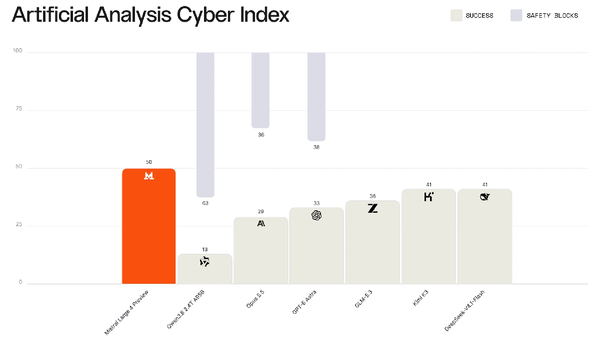
- Mistral Large 4, the leading European AI model, outperformed all open models outside of China (for a week, until Meta showed up), showcasing Europe's growing influence in AI development
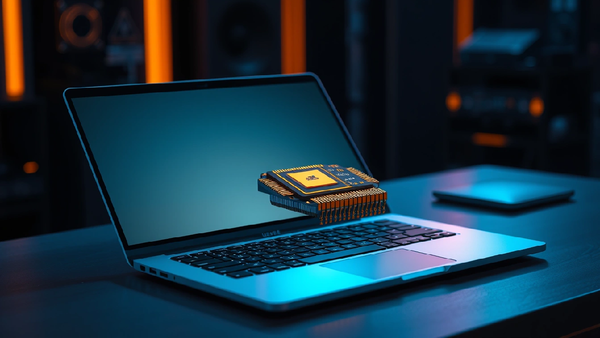
- Apple’s Mac mini and Mac Studio face new competition from Microsoft and Nvidia, as the race to build computers optimized for local AI intensifies
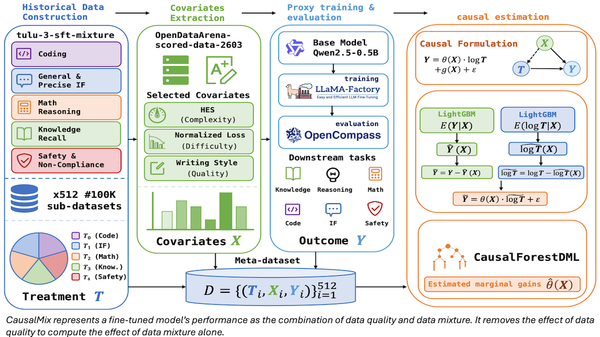
- Research from the team behind CausalMix offers a technique to select fine-tuning examples, eliminating guesswork in data mixing for AI training.
A special event for our community
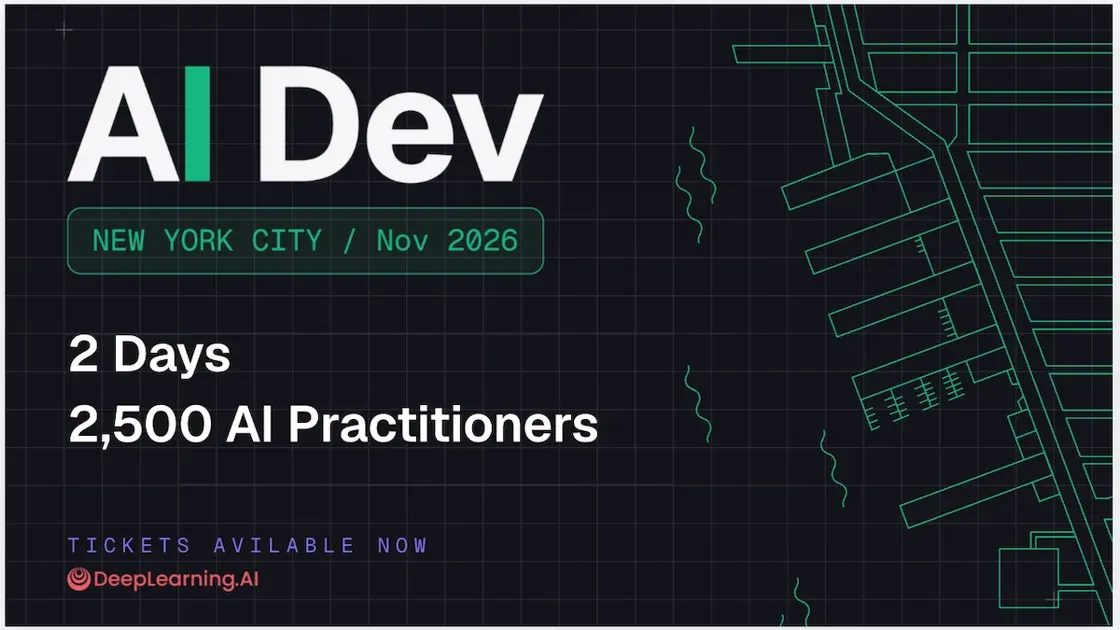
AI Dev brings together developers who build with AI every day. You'll hear from engineers at the companies shipping agents, models, and infrastructure, then meet them in person on the demo floor. Join us in New York City on November 30 and December 1.
Data Points is produced by human editors with AI assistance.