Computers Built for Local AI: Apple’s Mac mini and Mac Studio have competition from Microsoft and Nvidia
Developers have warmed to the economics and security of local models, either as an alternative or a complement to the cloud.
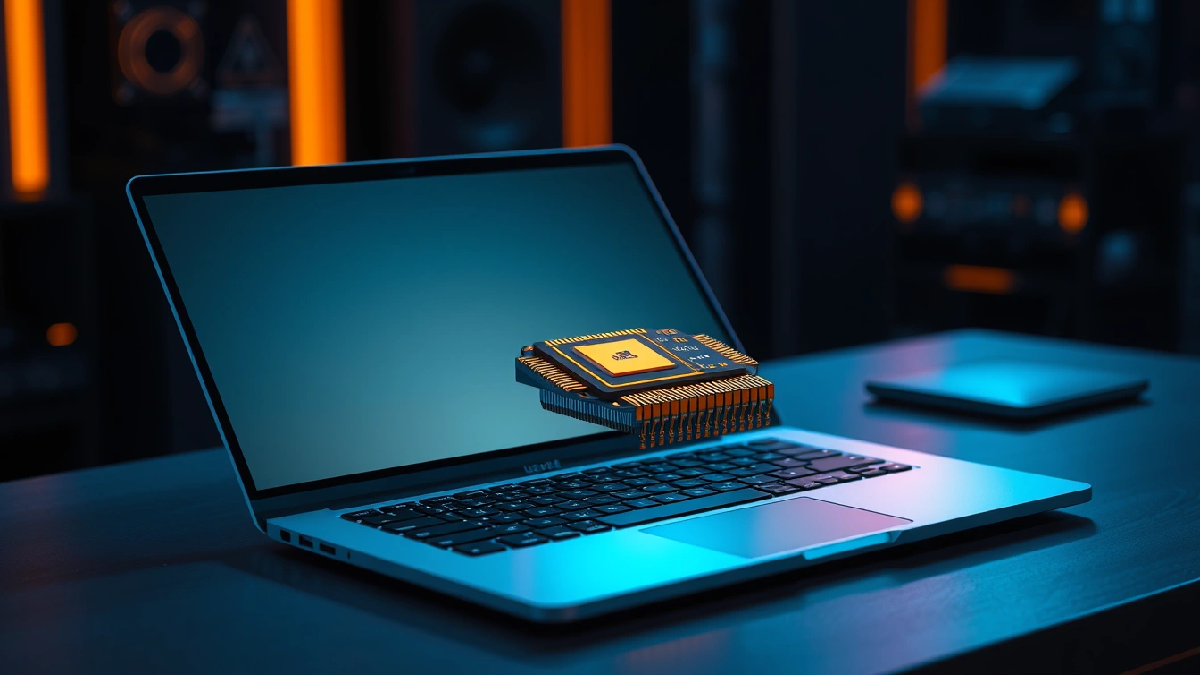
Developers have warmed to the economics and security of local models, either as an alternative or a complement to the cloud. Specialized computers from Apple, Microsoft, and Nvidia aim to take a bite out of the AI market with machines capable of running larger and more capable open models on-device.
What’s new: Apple’s upgraded Mac mini and Mac Studio desktops enable developers and AI researchers to run and fine-tune local models faster than before, offering an alternative to cloud computing for certain tasks. Nvidia’s DGX Spark series and Microsoft’s Surface Ultra laptops target a similar market: customers who want enough power to build with AI on their local machines, but in a user-friendly package.
How it works: By avoiding per-token cloud or monthly LLM subscription costs, a local setup could potentially save developers money over time, particularly [those running always-on agents]. But genuinely capable hardware is expensive: A maxed-out Mac Studio with 256GB of memory, an 80-core GPU, and 16TB of storage costs $18,299. For those with more modest local agent needs, a Mac mini starts at $899.
- Developers and hobbyists have always used local machines to run (and in some cases train) smaller AI models. They’ve repurposed machines with expensive GPUs designed for gaming, video rendering, or cryptocurrency mining. Those are gradually being replaced by computers custom-built for local AI. Others build their own custom computers with server-grade GPUs and memory.
- Apple’s Macs use custom-designed chips that integrate general-purpose CPUs, GPUs, and specialized neural processing units (NPUs) for machine-learning workloads. Notably, they use Apple Silicon rather than Nvidia’s popular GPUs, and they run Mac OS X rather than Windows or Linux.
- Nvidia’s DGX Spark machines use a similar system-on-a-chip design, with Nvidia-designed CPUs, GPUs, and unified memory. Likewise, Microsoft uses Nvidia’s DGX Spark chips for its Surface Ultra laptops. Nvidia’s chips (whether in its own machines or Microsoft’s) max out at 128 GB of memory, with up to a 6144-core GPU. A top-of-the-line Surface Ultra laptop costs $5,899, but has a much smaller hard drive (only 1 TB) than the most expensive Mac Studio.
- Traditionally, memory has been a bottleneck to running AI models locally. Large models require huge amounts of data to be moved between the CPU and GPU. Apple’s and Nvidia’s unified memory architecture aims to address that bottleneck by giving the processors access to the same pool of memory, reducing the need to copy data back and forth.
Performance: Apple Silicon and Nvidia’s RTX Spark chips were recently tested by an independent website, but most scores are self-reported.
- The website Tom’s Hardware compared Microsoft’s Surface Laptop Ultra, a maxed-out MacBook Pro with an M5 Max processor, and AMD’s AI Ryzen Halo mini-PC. On the AgentPerf-Local benchmark, using a quantized version the popular open model Qwen 3.8-27B, the Surface Laptop Ultra was able to solve all problems within 18.9 minutes, faster than either the Mac (24.74) or the AI Ryzen Halo (42.1). The Surface Laptop Ultra with Nvidia hardware likewise outperformed Apple and AMD chips on AgentPerf-Local using Qwen 3.6 35B A3B (8.08 minutes to 10.12 and 13.29, respectively).
- Apple says that the Mac mini with an M6 chip delivers AI performance up to 4x faster and graphics and storage 2x faster than its previous-generated M4 Mac mini. The Mac Studio with an M5 Ultra chip has 4.3x faster AI performance and up to 1.8x faster graphics than the previous Mac studio M3 Ultra.
- Nvidia says its RTA Spark N1 chip gives comparable AI performance to an RTX 5070-class GPU. This gives it a processing power of 1 petaflop (1,000 teraflops) at FP4 precision, a common quantization for local AI models.
- In general, Apple’s CPUs perform better, but Nvidia’s GPUs outperform Apple’s. Nvidia chips also give those developing or fine-tuning their own models access to Nvidia’s CUDA software, which helps AI models run on any Nvidia GPU.
Behind the news: Professionals using local AI inference are still a small market compared to the cloud, but now large enough to have genuine competition for computers designed for them at a wide range of price points. Mac desktops have sold well since the emergence of open-source personal agents, with news outlets describing weeks-long waits for Macs with more than 24GB of RAM as early as February. Nvidia’s DGX Spark laptops and desktops aim to similarly serve Windows users. For Nvidia, entering the desktop chip market ensures it can continue to sell its products to both consumer and enterprise markets, but also to increasingly blur that distinction. For Apple, it’s an alternative way to capitalize on the AI boom rather than building and hosting models, one that plays to its strengths in manufacturing high-end consumer hardware.
Why it matters: On-device AI models have several advantages over cloud-based models besides cost: more customizability, privacy, data sovereignty, potentially lower latency, and the ability to run without an internet connection. Others see cloud models and local models as complementary, designing workflows where a more powerful proprietary model solves high-level problems, then hands more mechanical work to a low-cost local model.
We’re thinking: We argued back in 2023 that strong commercial interests would increase AI usage at the edge. Not every application needs a frontier model, especially if a mid-sized model is fine-tuned to the task. But the main attraction today for local AI are privacy and data sovereignty, which is increasingly important as AI models handle more sensitive workloads. It’s useful for all of us to have a wide range of options.