Minimax’s M3.1 Flash Cuts Prices: Critical PHP bug found by AI affects majority of web sites
Mercury 3, diffusion-based alternative to Claude Haiku. d1-ultra, a highly accurate decision model. Using OpenAI’s models to rewrite and repair legacy code. llm-d, an all-around optimizer for serving open models.

In today’s edition of Data Points, you’ll learn about our top headlines, and more:
- Mercury 3, diffusion-based alternative to Claude Haiku
- d1-ultra, a highly accurate decision model
- Using OpenAI’s models to rewrite and repair legacy code
- llm-d, an all-around optimizer for serving open models
But first:
Minimax M3.1 Flash soon to be open weights
MiniMax released M3.1 Flash, a multimodal mixture-of-experts model with 428B total parameters, about 23B active, and a 1,000,000-token context window. Via API, it costs $0.15 per million input tokens and $0.60 per million output tokens, with no long-context surcharge. Weights are due to be released October 23 under a license MiniMax has not disclosed. Reasoning is always on across five effort levels (Low through Max), and requests that try to disable it, such as thinking.type=disabled or effort=none, now return an error; reasoning arrives in a separate reasoning_content field instead of inline <think> tags. For developers on M3, the practical changes are half the per-token price and a reasoning-parsing update, while self-hosting hardware requirements stay unknown until the weights ship. (MarkTechPost)
GPT-5.6 Sol finds critical security flaw in web language PHP
PHP’s maintainers rushed out a fix on Wednesday for PHP2Shell, a memory-management flaw in software that runs up to 70% of websites; the foundation’s security engineer calls it the project’s worst issue in over a decade and compares it to Heartbleed. Researcher Ryan Austin at the security firm Calif found it in August using OpenAI’s GPT-5.6 Sol, during an OpenAI-funded audit, after the problem had sat largely ignored for years because it was considered too hard to exploit. Researchers and engineers, joined by Google’s Wiz team and OpenAI’s own researchers, worked in secret on a fix touching nearly 200 files, but a leak on Hacker News forced them to release it a day ahead of the planned October 22 date. Defenders now fear that AI tools can turn a published patch into a working exploit within hours, and some site operators are taking their sites offline as a precaution. For AI developers, the story shows how their models are now central to security on both sides: the same capabilities that uncover deep bugs can speed up attacks, labs are increasingly expected to fund and coordinate audits of open-source projects that are flooded with AI-found bugs, and the window between a patch’s release and its exploitation is shrinking fast. (The Wall Street Journal)
Mercury 3, a diffusion-based text model to rival Claude Haiku 5.5
Inception released Mercury 3, a language model that generates text by diffusion rather than one token at a time, and says it matches Anthropic’s Claude Haiku 5.5 and OpenAI’s GPT-6 Luna on quality. Mercury 3 refines many tokens in parallel, which Inception says yields about 1,000 tokens per second, 4x to 8x faster than Haiku 5.5, GPT-6 Luna, and GLM-5.3 Flash, with better scores on agentic benchmarks. Launch pricing is $0.10 per million input tokens, matching those two models, and $0.35 per million output tokens, 35 percent below them; that is 50 percent off Inception’s eventual standard price, and the company has not said how long the promotion lasts. Inception has not disclosed the model’s parameter count, and the speed and benchmark results are the company’s own. For developers building latency-sensitive features such as real-time agents, Mercury 3 is an alternative to test against small autoregressive models. (The DeepView)
Liquid AI’s decision model outperforms Jev on benchmarks
Liquid AI released d1-ultra, a hosted decision model that takes text, images, or both and returns a probability for each possible answer in one forward pass, with no output tokens generated. Questions come in three types: yes/no, pick-one-label, and a score on an ordered rubric. Billing covers input tokens only at $0.042 per million, the same rate as TypeSafe’s Jev, and images cost 1.5 tokens per 32x32-pixel patch. Each question is billed as its own prompt, so three questions on one image bill that image three times, and requests are capped at eight images and 4.5 MB. Liquid reports a score of 65 on the Artificial Analysis Decision Index, ahead of Jev 1.13 at 58 on the index’s October 13 listing. Parameter count, context length, and per-benchmark results are not public, and weights are not available. For routing, moderation, and triage calls, decision models like d1-ultra offer a fast, affordable alternative to LLMs. (MarkTechPost)
Putting GPT-6 models to work to repair and rebuild legacy code
OpenAI published results from two new evaluations of how its models handle low-resource programming languages, meaning languages with little public code and documentation to learn from, such as COBOL, Fortran, and Visual Basic. On MultiLangBench, which asks a model to build a SQLite-compatible database engine in each of 20 languages, OpenAI reports that GPT-6 Astra averages an 87.4% test pass rate, up from 26.8% for GPT-5.6 Sol, with COBOL rising from 10.9% to 72.1%. The cheaper GPT-6 Luna reaches 40.3% at an estimated $0.77 per sample versus $3.48 for GPT-5.6 Sol. On a separate COBOL-to-C++/Java/Kotlin/Python/Rust migration test requiring byte-for-byte output parity on hidden tests, GPT-6.1 Sol scores 86.6% at low reasoning effort (GPT-5.6 Sol: 5.4%) and 97.9% at higher effort; the migration evaluation is not released, while the MultiLangBench setup and test suite are on GitHub. OpenAI says production migrations still need expert review and testing against business rules. Teams with COBOL or Fortran code can now test these models on their own repositories, and the public MultiLangBench harness lets them check the per-language numbers before relying on them. (OpenAI)
IBM and partners release llm-d, a Swiss army knife for open AI
The llm-d project, led by Red Hat, IBM, and Google, released version 1.0 of its Kubernetes-native framework for serving large models across multiple accelerators and clouds. It runs on top of inference engines such as vLLM or SGLang and adds distributed routing, a stable API, flow control that prioritizes requests among competing tenants, and upgrades that do not interrupt service. It builds on five existing techniques: prefix-cache-aware routing, KV-cache offloading, batch inference optimization, prefill/decode disaggregation, and wide expert parallelism for mixture-of-experts models. The maintainers report that on an agentic coding workload the prefix-aware router captured 97 percent of available cache reuse, and that IBM and Red Hat ran 3,000 software-engineering agents on a self-hosted deployment for 5 to 10 times less than the price of the same open model as a hosted service; the article gives no test configurations. For teams running open weight models on their own clusters, 1.0 offers a stable API and priority controls that could replace custom routing and scheduling layers, though the cost figures are the project’s own and unverified. (IBM)
Want to know more about what matters in AI right now?
Read the latest issue of The Batch for in-depth analysis of news and research.
Last week, Andrew talked about the significant difference in AI performance between verifiable tasks, which have clear right answers, and judgement tasks, which require contextual decision-making. AI can also make faster progress on performing verifiable tasks due to powerful training techniques like reinforcement learning.
“Society also has a long history of looking at AI’s performance on a subset of tasks and overgeneralizing its capabilities. We saw this when AI beat the human world chess champion (Deep Blue), won Jeopardy (Watson), and excelled at Go (AlphaGo). Each of these moments led to hopes about AI’s immediate applicability to other tasks that turned out to be over-optimistic.”
Read Andrew’s letter here.
Other top AI news and research covered in depth:
- Claude Sonnet 5.5 and Haiku 5.5 give developers fast, highly capable alternatives to Opus 5.5, expanding the Claude model family.
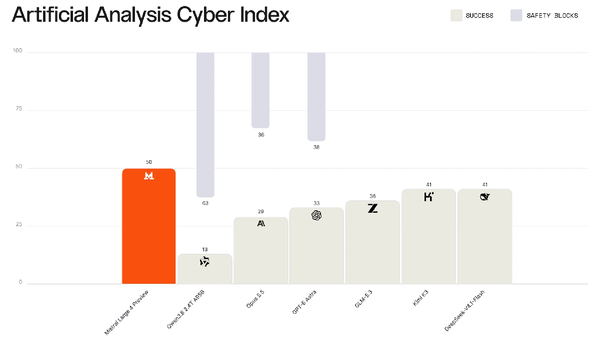
- Mistral Large 4, the leading European AI model, outperformed all open models outside of China (for a week, until Meta showed up), showcasing Europe's growing influence in AI development.
- Apple’s Mac mini and Mac Studio face new competition from Microsoft and Nvidia, as the race to build computers optimized for local AI intensifies.
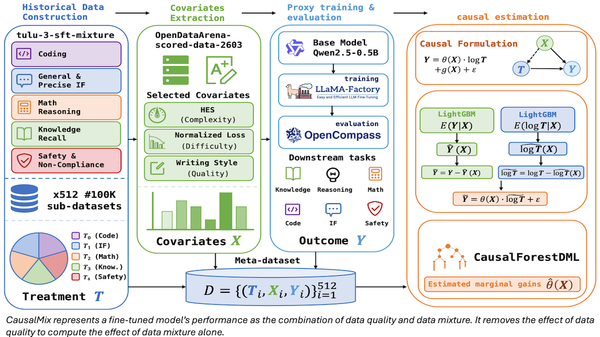
- Research from the team behind CausalMix offers a technique to select fine-tuning examples, eliminating guesswork in data mixing for AI training.
A special event for our community

AI Dev brings together developers who build with AI every day. You'll hear from engineers at the companies shipping agents, models, and infrastructure, then meet them in person on the demo floor. Join us in New York City on November 30 and December 1.
Data Points is produced by human editors with AI assistance.