GPT-6.2 Astra & Sol cut prices to match Claude: Alibaba updates to Qwen4; developers await open models
All the new models announced at Microsoft Ignite. MDASH, a GitHub scanner that fixes bugs, not just reports them. Nvidia’s board chair says no to reinstating Jensen Huang. Nvidia halts sales of last-generation H200 GPUs to China.

In today’s edition of Data Points, you’ll learn about our top headlines, and more:
- All the new models announced at Microsoft Ignite
- MDASH, a GitHub scanner that fixes bugs, not just reports them
- Nvidia’s board chair says no to reinstating Jensen Huang
- Nvidia halts sales of last-generation H200 GPUs to China
But first:
GPT-6.2 Astra leads all models in scientific work
Artificial Analysis reports that OpenAI’s GPT-6.2 Astra places second on its Intelligence Index, behind only Anthropic’s Claude Fable 5.2. Astra gained 5 points over GPT-6 Astra and now sits above Gemini 4 Carbon (60) and Claude Opus 5.5 (59) at top effort settings, while GPT-6.2 Sol gained 2 points to reach 57, matching GPT-6 Astra at about 15 percent of the cost per task. Astra is priced at $8 per million input tokens and $40 per million output tokens, 20 percent below GPT-6 Astra, with cached input cut to $0.40 from $1.00; Sol stays at $2 and $10. The models lead the site’s science, 3D and robotics evaluations, but the Coding Agent Index is flat for Astra and down 3 points for Sol, and both hallucinate often on factual questions (59 percent for Astra, 55 percent for Sol at max effort). For most software developers, the results suggest that coding-heavy workloads gain little from the upgrade, while the Sol result and the lower Astra price give cheaper options for science, knowledge and agentic work. (Artificial Analysis)
Alibaba debuts new flagship proprietary model
Alibaba released Qwen4-Max, its newest large language model, on Alibaba’s cloud platform. The model has 2.4 trillion parameters but activates only 71 billion at a time, backed by 328 billion N-gram parameters that cache frequently repeated calculations. Its training uses a residual connection (a shortcut that lets gradients skip layers) with four gated channels instead of the usual single one, and its attention mechanism adds Gated DeltaNet and QSA to cut hardware needs and skip unneeded data. On Terminal-Bench 4.0 coding challenges, Alibaba says Qwen4-Max beat Qwen3.8-Max while using up to 49% fewer tokens. Alibaba also open-sourced Qwen-Live-Delivery-Plugin, which has the model return a quick first draft and refine it as users give feedback, and plans to open-source smaller models built on the same techniques later. This model is proprietary, but Alibaba said it would release smaller open weight models in the Qwen4 family. (Silicon Angle)
Microsoft debuts models for coding, images, updated Copilot
Microsoft announced six AI models at its Ignite conference, covering coding, cybersecurity, image generation, transcription and real-time voice. The lead model, MAI Code 2, delivers 98% of GPT-6.1 Sol’s performance at 40% of the price and 96% of Claude Opus 5.5’s at 5% of the cost, according to Microsoft. MAI Code 2 Flash is a smaller model that Microsoft says matches GPT-6 Luna at 65% of the price, and MAI Cyber 2 Flash is said to beat GPT-6 Astra on a security benchmark at under 2% of the cost per task. The comparisons use selected benchmarks, some of the price gaps reflect promotional discounts, and Microsoft’s Mustafa Suleyman acknowledged a model tuned for everyday coding will be weaker at advanced math or science. MAI Code 2 will be available in GitHub Copilot, and enterprise customers can license model weights to customize with their own data, but only on Azure, so Copilot users may soon be running Microsoft’s own models in place of OpenAI’s and Anthropic’s. (Axios)
GitHub study focuses on AI bug fixes, not just reports
GitHub and Microsoft ran a pilot in which Microsoft’s Codename MDASH scanner, which uses the MAI Cyber model, looked for security bugs in six open source projects: AutoGPT, Caddy, Express, FastMCP, ImageMagick, and Netty. It flagged thousands of possible issues. A GitHub Security Lab triage agent removed duplicates and invalid findings, then seven Microsoft FORGE Lab researchers spent about two days per project verifying the rest by hand. That left 99 reports, sent privately through GitHub’s private vulnerability reporting, each with a suggested fix. As of November 15, maintainers had fixed 55 of them, 14 in a release; Caddy’s maintainers fixed all 22 of theirs within a week, and an ImageMagick maintainer said a report that normally takes 30 to 60 minutes to read and fix took 15. The authors note that six projects is a small sample and that the manual review does not scale yet. The pilot’s model for AI-assisted reporting is to check each finding against the project’s threat model and security policy, report it privately, and include a fix — the researchers note that AI-assisted bug reports are plentiful, but AI bug fixes remain scarce. (GitHub)
Nvidia board not interested in bringing back Jensen Huang
On Nvidia’s Q3 earnings call, new board chair Harvey Jones said the board unanimously accepted Jensen Huang’s resignation and does not intend to reinstate him as CEO. Jones said the board would not take questions on the circumstances of the resignation or the ongoing investigation. Earlier the same day, Huang posted on X that he “did not live up to the standards expected of everyone,” and would cooperate with the board’s investigation, but offered to return as CEO if the board decided that was best for the company. Since his November 12th resignation, stories about Huang have focused on multiple reported marital affairs, including one with an alleged Chinese intelligence asset suspected of facilitating illicit chip sales. Huang is scheduled to testify before Congress on December 1st. For developers who depend on Nvidia hardware and CUDA, the call offered no long-term successor or product guidance, so the company’s near-term direction depends on the internal investigation and the congressional testimony. (The Verge)
Nvidia will end controversial H200 sales to China-based customers
Acting Nvidia CEO Colette Kress said Tuesday that the company will no longer sell H200 chips in China, ending its use of an arrangement brokered by former CEO Jensen Huang and President Trump. That arrangement routed the chips through the U.S. so the government could collect a 25% tariff. Huang stepped down last week, and the U.S. issued rules Monday barring advanced chips from foreign data centers that serve Chinese customers remotely; Jefferies estimates the rules could cut $44 billion to $62 billion from Nvidia’s data center revenue next year, but Kress said demand for updated chips like Vera Rubin suggested discontinuing H200 chips would have no impact on top-line revenue. China had already largely refused H200 deliveries to favor its domestic chip industry, according to Georgetown researcher Jacob Feldgoise, and export control attorney Dan Fisher-Owens says data centers must now certify they serve no Chinese customers to buy Nvidia chips. Data centers that cannot certify may have to turn to other chip suppliers, which would affect where Chinese labs can train models on Nvidia hardware. (TechCrunch)
Want to know more about what matters in AI right now?
Read the latest issue of The Batch for in-depth analysis of news and research.
Last week, Andrew talked about the growing importance of building an agent harness for AI applications, introduced the open source OpenWorker Agent Harness SDK, and provided a guide on creating coding and file-organizing agents using this tool.
“An agent harness is the code that wraps around an LLM and provides it with context, tools, and guardrails to turn it into an application. Since late last year, LLMs have become powerful enough that it’s practical to build many applications by repeatedly calling an LLM and letting it decide what to do next.”
Read Andrew’s letter here.
Other top AI news and research covered in depth:
- OpenAI’s security-tuned version of GPT-6 Astra closed root-level Linux holes for $1,280 each, showcasing a cost-effective approach to cybersecurity.
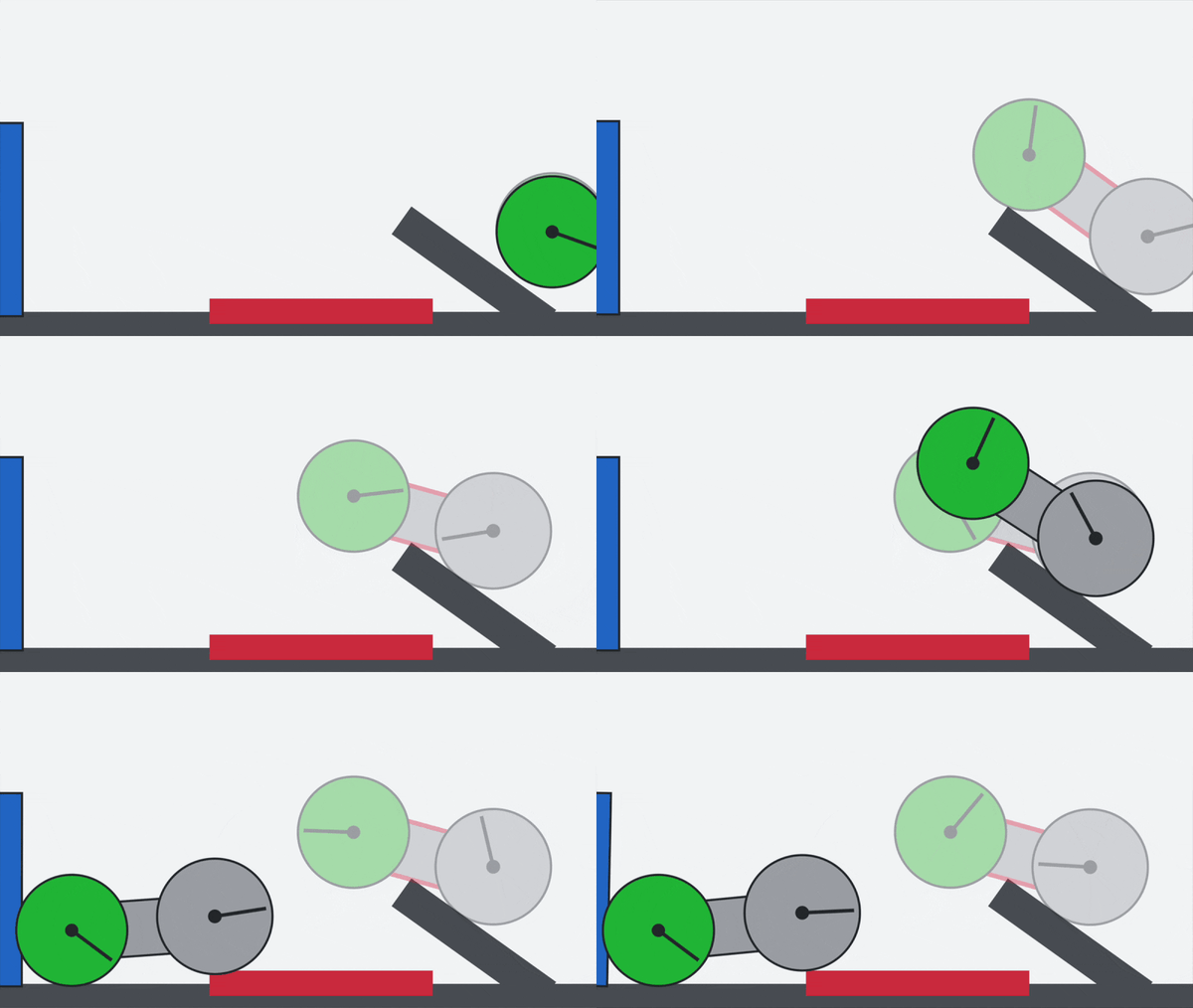
- Researchers demonstrated that GPT-6 Astra can fine-tune neural networks by editing model weights, enhancing the performance of smaller models.
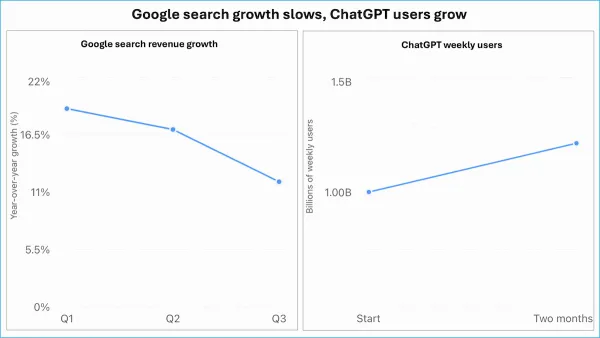
- In the ongoing battle for search engine dominance, Google makes less money on LLM-powered search while OpenAI strives to capture its user base.
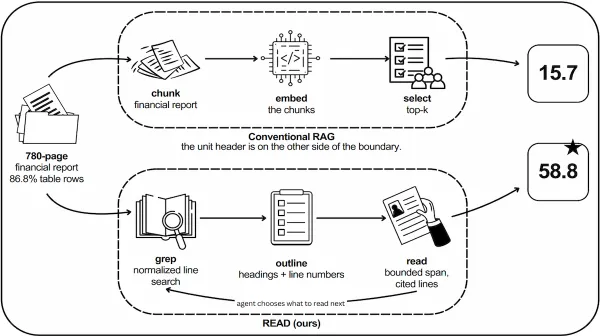
- An innovative agent that searches, outlines, and reads entire documents has been shown to outperform traditional chunk-and-embed retrieval methods.
A special event for our community
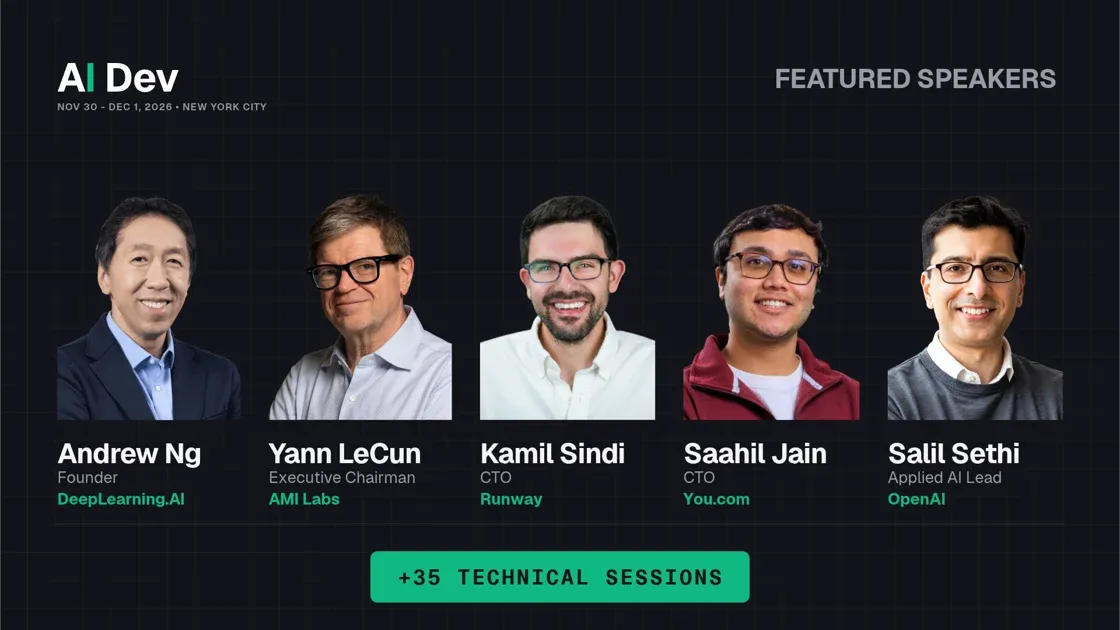
The full agenda for AI Dev NYC, Nov 30 - Dec 1, is live. Hear Yann LeCun and Andrew Ng discuss world models and what comes after LLMs, plus sessions from OpenAI, Runway ML, and You.com on production systems, video models, and agent inference.
Data Points is produced by human editors with AI assistance.