Gemini 4 Hydrogen balances accuracy and speed: Open source llama.cpp finally reaches version 1.0.0
Jensen Huang steps down, Colette Kress named interim CEO. Google releases most promising decision model yet. Runway’s Praxis-1 leads on robotics simulation benchmark. Cloud-native developers top 21 million, strain open source.

In today’s edition of Data Points, you’ll learn about our top headlines, and more:
- Jensen Huang steps down, Colette Kress named interim CEO
- Google releases most promising decision model yet
- Runway’s Praxis-1 leads on robotics simulation benchmark
- Cloud-native developers top 21 million, strain open source
But first:
Google debuts a fast model to complement Carbon, replace 3.8 Flash
Google released Gemini 4 Hydrogen, a faster model in the Gemini 4 family than Carbon and Argon, and made it available across AI Studio, the Gemini API, the Gemini app, Search, and Google Antigravity. Hydrogen costs $1.50 per million input tokens and $7.50 per million output tokens, flat across a 1 million-token context window, with four thinking levels: low, medium, high (the default), and a new xhigh. Google says Hydrogen scores 51 on the Artificial Analysis Intelligence Index at the default level (54 at xhigh) against Argon’s 50, and finishes tasks 2.5 times faster than Gemini 3.8 Flash. Google also added Orchestrator to Antigravity, which switches between models such as Carbon and Hydrogen within one session; on Terminal-Bench 4.0 it reached near-Carbon success rates while using 24% less quota and finishing 19% faster, by Google’s measurement. Teams on Gemini 3.8 Flash have a cheaper, faster migration target, and Orchestrator offers a way to split planning and execution across models without managing the routing themselves. (Google)
Llama.cpp gets first major update since 2023
The llama.cpp team at Hugging Face released v1.0.0 of both libllama and libggml, the project’s first major version after about 3.5 years of development. From now on, breaking changes to the public C API or ABI in each library’s include directory will trigger a major-version bump, while backward-compatible features, backend updates, and model support get minor bumps and bug fixes get patches. The project now ships through Docker, Debian, Homebrew, conda-forge, MacPorts, Winget, and an XCFramework for iOS and macOS, plus pre-release artifacts for Linux, macOS, Windows, Android, and iOS. It supports more than 150 model architecture variants and the mainstream speculative decoding methods, and runs CI on self-hosted runners with hardware support from NVIDIA, AMD, Qualcomm, Arm, IBM, and Intel. Developers who link against libllama or libggml can now treat the version number as a signal for when an upgrade will break their build, and can pin to a major version in package managers. (Hugging Face)
Nvidia CEO and founder Jensen Huang resigns
Following his admission of an extramarital affair and a rapid third-party investigation, Nvidia announced that Jensen Huang resigned as president, CEO, and board member, effective immediately, after 33 years at the company. CFO Colette Kress is now interim CEO while keeping her CFO role, and the board has begun a search that will consider internal and external candidates. Harvey C. Jones, a former Synopsys CEO, was appointed the board’s first-ever chair. The company says operations, customer commitments, and the product roadmap will continue without interruption, and the third-quarter fiscal 2027 earnings report stays scheduled for November 17. (Nvidia)
Google releases decision model that rivals Jev at higher price
Google released the Gemini Decisions API, backed by a new model, gemini-decision-1, that returns calibrated probabilities for typed questions instead of generating text. One request takes a shared input (text, image, audio, video, or PDF) and up to 1,000 questions, each a yes/no, a choice among 2 to 255 options, or a score on a rubric of up to 255 levels. Input costs $0.10 per 1M tokens, output tokens are always zero, and the shared input is billed once per request; Google reports 150-250 ms end-to-end latency for inputs up to 16K tokens. In Google’s self-reported benchmarks, the model leads 7 of 9 accuracy tests and has a top-1 calibration error of 0.0250, about half the 0.0494 of TypeSafe Jev1.14, but it trails Jev 1.14 on When2Call (79.9% vs 82.0%) and Mind2Web Multimodal (86.2% vs 86.8%) and costs more per token ($0.10 vs $0.042). It runs only on Google’s hosted API, with a 262,144-token context and no prompt caching or Batch API. For agent builders, this replaces generate-then-parse for routing, policy checks and grading with numeric outputs they can branch on. Note that the benchmark figures are unverified and repeated context is billed in full on every call. (MarkTechPost)
Runway publishes open-weight robotics model
Runway released Praxis-1, a robot control model, with open weights and source code under the commercial-use-friendly Apache 2.0 license. The model takes camera images, text instructions, and the robot’s position data, predicts how the scene will change, and outputs matching robot movements. It builds on a video model fine-tuned with human-action videos and robot data, and it still needs adaptation per robot: about 277 hours of DROID data for a Franka arm, and 1,400 to 2,600 hours for a dual-arm robot. On Nvidia’s RoboLab-120 simulation leaderboard Runway reports a 46.2 percent success rate, ahead of FLUX 3 Action at 42.9 percent among World Action Models. Note that Runway ran the tests itself and they are not independently verified. For developers, the weights and code are on Hugging Face and GitHub. However, the standard model needs an 80 GB GPU; the compressed version is estimated to fit a 32 GB RTX 5090 without a measured memory figure. (The Decoder)
Cloud-native developers grow by millions, lead AI adoption
The Cloud Native Computing Foundation (CNCF) and research firm SlashData’s latest State of Cloud Native Development report counts more than 21 million cloud-native developers, or 41% of developers worldwide. About 75% of them use AI in some form, compared with about 55% of other developers, according to SlashData’s Liam Bollmann-Dodd. CNCF’s Bob Killen said the headcount likely undercounts, since many people consume cloud-native applications without knowing it. In interviews at KubeCon + CloudNativeCon NA, Killen said maintainers are struggling with a flood of agent-generated pull requests and issues, many of them low quality but “just good enough” to need review, and Bollmann-Dodd predicted developers will manage model and token spending much as FinOps practices followed rising cloud bills. For developers who contribute to open-source projects, the maintainer strain suggests that low-effort AI-generated pull requests will be unwelcome. (Silicon Angle)
Want to know more about what matters in AI right now?
Read the latest issue of The Batch for in-depth analysis of news and research.
Last week, Andrew talked about the growing importance of building an agent harness for AI applications, introduced the open source OpenWorker Agent Harness SDK, and provided a guide on creating coding and file-organizing agents using this tool.
“Building an agent harness requires managing LLM context. For long-running agents, this requires building a memory architecture (such as memory compaction when the context gets too long). A harness may also need guardrails (such as input/output checking), a mechanism for approvals, security controls (for example, keeping credentials away from the LLM), and sandboxing.”
Read Andrew’s letter here.
Other top AI news and research covered in depth:
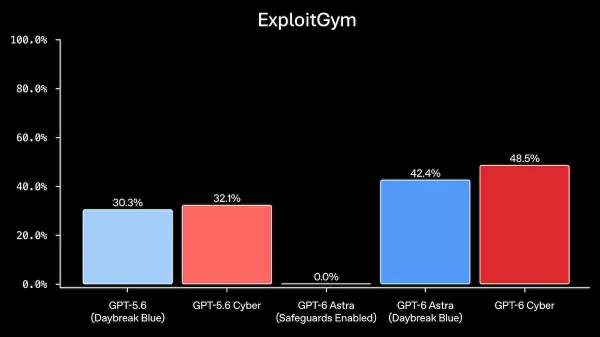
- OpenAI’s security-tuned version of GPT-6 Astra closed root-level Linux holes for $1,280 each, showcasing a cost-effective approach to cybersecurity.
- Researchers demonstrated that GPT-6 Astra can fine-tune neural networks by editing model weights, enhancing the performance of smaller models.
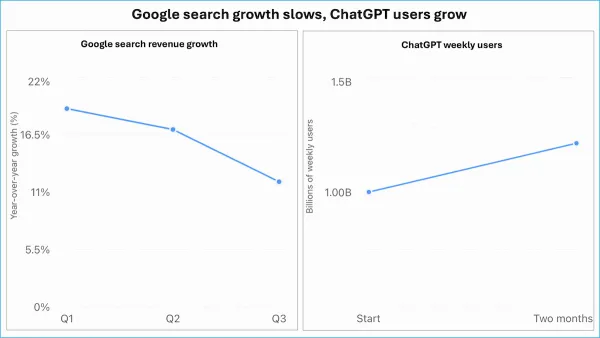
- In the ongoing battle for search engine dominance, Google makes less money on LLM-powered search while OpenAI strives to capture its user base.
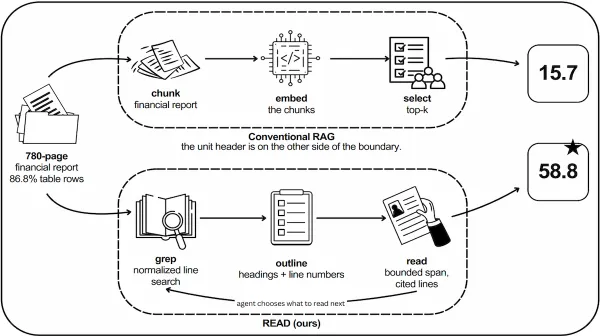
- An innovative agent that searches, outlines, and reads entire documents has been shown to outperform traditional chunk-and-embed retrieval methods.
A special event for our community
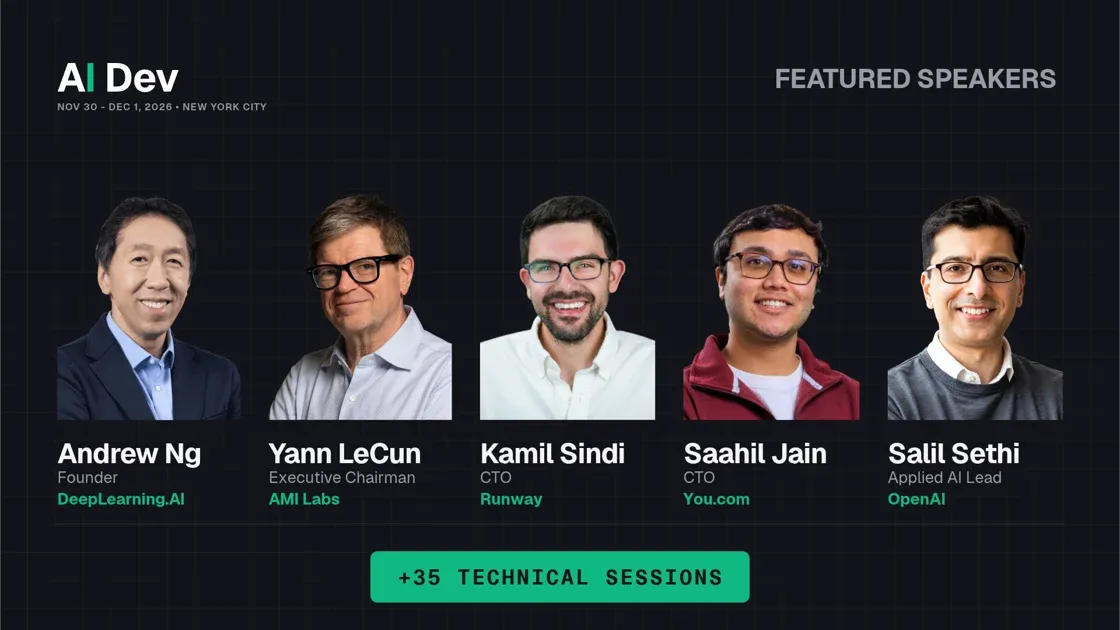
The full agenda for AI Dev NYC, Nov 30 - Dec 1, is live. Hear Yann LeCun and Andrew Ng discuss world models and what comes after LLMs, plus sessions from OpenAI, Runway ML, and You.com on production systems, video models, and agent inference.
Data Points is produced by human editors with AI assistance.