DeepSeek-V4-Pro Gets Refreshed: DeepSeek’s flagship only slightly outperforms Flash model; Open source harness draws interest
DeepSeek’s flagship model graduated from preview with improved performance plus the harness the model was benchmarked in.
DeepSeek’s flagship model graduated from preview with improved performance plus the harness the model was benchmarked in. The harness is free and open-source, but the company’s model prices increased.
What’s new: DeepSeek released DeepSeek-V4-Pro-0813, the official version of the larger of its two fourth-generation models.
- Input/output: Text in (up to 1 million tokens), text out (up to 384,000 tokens, 78.1 tokens per second)
- Architecture: Mixture-of-experts transformer, 1.6 trillion total parameters, 49 billion active per token; optional speculative decoding module brings the checkpoint to 1.7 trillion parameters
- Features: Adjustable reasoning (none, low, high, max), defaults to high reasoning; tool calls; context caching
- Performance: 53 points on Artificial Analysis’ Intelligence Index, third among open weights models; 10th of 115 models on Arena’s WebDev leaderboard
- Availability/price: Via DeepSeek’s app and website via Expert Mode; via DeepSeek’s API at $1.32/$0.044/$3.96 per million input/cached/output tokens during peak hours (01:00–04:00 and 06:00–10:00 UTC), half price during off-peak hours
- Weights/license: Free for commercial and noncommercial use under the MIT license
- Undisclosed: New training data and methods, knowledge cutoff
The company also released an open-source agent harness in developer preview and increased its API prices for all models.
How it works: DeepSeek-V4-Pro-0813 keeps the parameter count and architecture of the April preview, including DSpark, the speculative decoding module DeepSeek earlier released for the preview. DeepSeek says the update sharpens the model’s agentic skills but did not specify what it changed.
- DeepSeek pretrained the preview on more than 32 trillion tokens, then fine-tuned 10 separate model copies on individual domains via supervised learning and reinforcement learning. Finally, it merged them into one model via on-policy distillation, in which a new copy, the student model, imitated the 10 specialists’ outputs.
- DeepSeek’s hybrid attention alternates between two kinds of attention layers. Both compress the keys and values the model stores while reading input, but one also attends only to a selected subset of tokens. For 1 million tokens of input, the model uses only 27 percent of the computation and 10 percent of the memory for stored keys and values that DeepSeek-V3.2 required.
- The model returns reasoning along with its answer. When a request includes tool use, later API requests must include past reasoning traces or the API rejects them. This lets reasoning persist across calls.
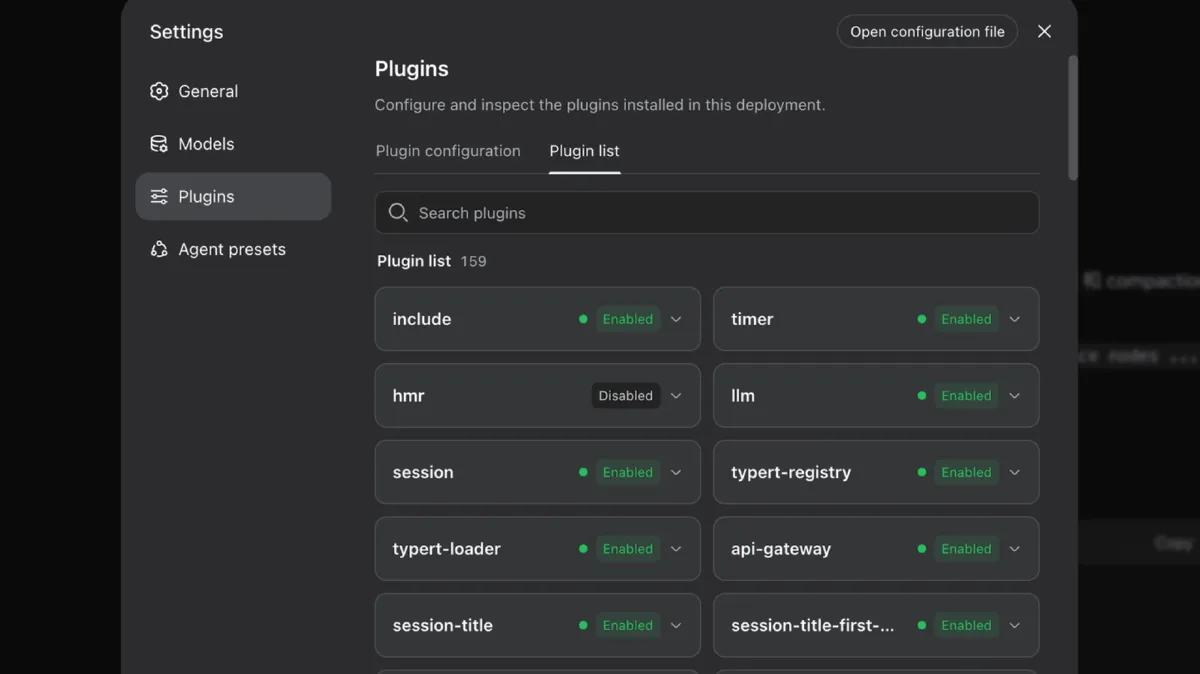
- DeepSeek Harness treats models, tools, skills, sessions, sandboxes, storage, loops, scheduling, and user interfaces as configurable, swappable plugins. It logs everything the model ingests, such as system prompts, reasoning, tool calls and results, subagent scheduling, and context injection, so any session can be resumed, forked, searched, or replayed. Its minimal mode, which gives a model only a shell and file editor, is the setting DeepSeek used for its coding-agent benchmarks. It is built on a plugin kernel called Cordis, and DeepSeek and Peking University described its design in a paper.
- DeepSeek’s API accepts requests in OpenAI’s Responses format, so OpenAI’s Codex coding agent can use DeepSeek models after running a setup script. This makes migrating from OpenAI models easier.
Performance: Independent evaluators found that DeepSeek-V4-Pro-0813 made large gains over its April preview, but held only a narrow lead over DeepSeek’s smaller Flash model. DeepSeek-V4-Pro-0813 debuted at third place in overall intelligence among open-weights models, but is roughly 10 points behind the best proprietary models on Artificial Analysis’ Intelligence Index. Its clearest improvement is in coding capability. The model’s cost per task remains a fraction of most proprietary leaders’, but after price cuts, OpenAI’s nearly equally capable GPT-5.6 Luna now costs less per task.
- On the Intelligence Index, a composite of nine evaluations of economically useful tasks, DeepSeek-V4-Pro-0813 set to max reasoning (53 points, $0.25 per task) jumped eight points from its April preview set to max reasoning (45 points, $0.05 per task) and a point above DeepSeek-V4-Flash-0731 set to max reasoning (52 points, $0.11 per task). It trails 10 models on the index, including Gemini 3.7 Flash set to high reasoning (57, $0.40). It outperforms GPT-5.6 Luna set to max reasoning (52, $0.05 per task), but GPT-5.6 Luna is the rare model that costs less than the updated DeepSeek-V4-Pro or Flash per task.
- In DeepSeek’s tests, which used max reasoning and DeepSeek Harness’s minimal setup, DeepSeek-V4-Pro-0813’s largest gains stemmed from coding-agent tasks. On Terminal-Bench 2.1 (multistep tasks in a command-line environment), it rose from 72.1 percent to 87.9 percent; on DeepSWE (resolving difficult software-engineering issues), it rose from 12.8 percent to 62.7 percent; and on CyberGym (finding software vulnerabilities), it rose from 52.7 percent to 83.3 percent, just ahead of Claude Fable 5 set to max reasoning with fallback (83.1 percent).
- Independent evaluations that used DeepSeek-V4-Pro-0813 with other harnesses showed lower performance on Terminal-Bench 2.1. Vals AI, which uses their internal evaluation harness, measured the model at 54.68, and Artificial Analysis, which uses the open-source Terminus 2 harness, measured the model at 78.7 percent.
Behind the news: DeepSeek recently released an experimental version of DeepSeekV4-Flash with vision capabilities. The company has not announced plans for a similar vision-language version of DeepSeekV4-Pro.
Why it matters: DeepSeek published the harness it used to benchmark its models, which few companies do. Agentic performance is a joint function of the model and its scaffolding, so a published harness is the difference between numbers that a developer can only read and those they can reproduce. The harness is also MIT-licensed and model-agnostic.
We’re thinking: The agentic harness market is getting crowded! Although it’s an open-source release, some users may be skeptical of putting DeepSeek Harness into production before it receives a thorough evaluation from security experts, plus benchmarks when running other models besides DeepSeek’s. Let’s hope we see solid third-party testing — followed by developer experiments and modifications — soon.