Anthropic Opens Its Books: Anthropic's S-1 outlines company's strong financials, methods, potential risks after IPO
Claude’s maker will sell company shares to the public for the first time.
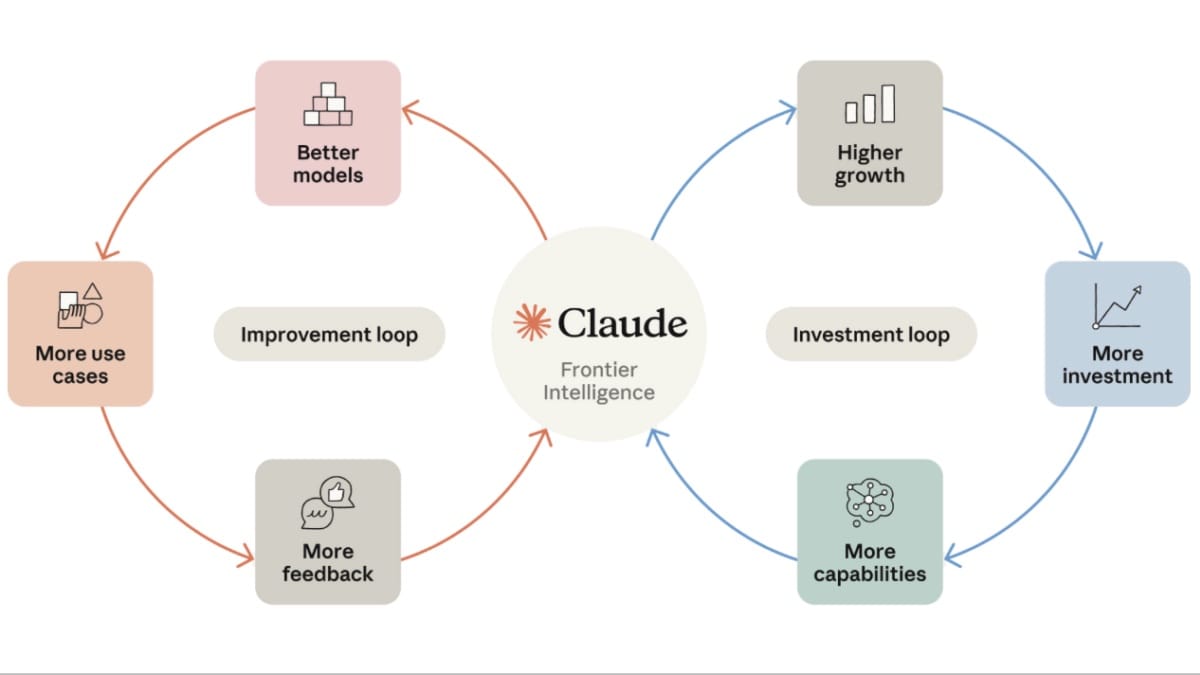
Claude’s maker will sell company shares to the public for the first time. Anthropic’s financial statements show first-half revenue that grew 14-fold from a year earlier, an operating profit in the second quarter, and hundreds of billions of dollars in commitments to buy computing power.
What’s new: On October 26, Anthropic filed an S-1, the registration statement a company must submit to the U.S. Securities and Exchange Commission before it goes public. Anthropic plans to list on the Nasdaq stock exchange under the ticker ANT. According to the filing, the offering’s main purposes are to increase Anthropic’s capital and financial flexibility and to create a public market for its shares. Anthropic plans to use the money to support its continued growth, including much-needed compute and infrastructure.
The offering: Anthropic could go public as soon as the week before Thanksgiving and hopes to sell roughly $100 billion in shares, according to The Wall Street Journal. The filing leaves the final share price and total share count blank. Some investors expect Anthropic’s post-IPO valuation to land between $1.5 trillion and $2 trillion, according to Bloomberg.
Who’s in charge: Public shareholders will get almost no say in the company’s future direction. A single share held by a company owned by Anthropic’s seven co-founders, including CEO Dario Amodei, carries 50.1 percent of the vote on most matters, and its voting power will automatically remain at 50.1 percent if Anthropic issues more stock.
The numbers: Anthropic’s revenue is growing much faster than its spending, even accounting for the growing cost of compute.
- Revenue reached $16.3 billion in the first half of 2026, up from $1.2 billion a year earlier. Anthropic says it doesn’t expect revenue to keep growing quite that fast. In 2026’s second quarter, Anthropic earned an operating profit (revenue minus the costs of running the business) of $974 million on $11.6 billion in revenue, its first in any period the filing reports.
- The company’s quarterly compute and infrastructure expenses rose from $944 million in early 2025 to $5.6 billion in the second quarter of 2026, but compute and infrastructure’s share of revenue fell from 251 percent to 48 percent.
- Under standard accounting rules, Anthropic lost $80.7 billion in the first half of 2026, but most of that came from an accounting adjustment, not money the company spent. Day-to-day operations brought in $3.9 billion in cash.
- Anthropic has committed to spend hundreds of billions of dollars on computing power, often with companies that also finance it. Named deals include about $161.2 billion in rent on equipment from the chipmaker Broadcom, at least $114.5 billion with Google, at least $110 billion with Amazon, and up to $120.5 billion with SpaceXAI, under agreements that either party can cancel after early 2027. Google and Amazon both invested early in Anthropic, a relationship that the S-1 warns could lead to conflicts of interest.
- The S-1 reveals that Anthropic’s Claude wrote more than 90 percent of the contributions to Anthropic’s codebase in September 2026. However, the filing says that using AI to build more capable AI in this way “could also pose a considerable safety risk.”
Risk disclosures: The S-1 laid out both conventional and unusual risks for a mainstream American technology company.
- Government sanctions could pose a future risk. In June 2026, the U.S. Department of Commerce imposed worldwide export restrictions on Fable 5 and Mythos 5, two configurations of what was then Anthropic’s most capable model. To comply, Anthropic switched off both models for every customer, while its other models stayed available. It restored them once Commerce lifted the restrictions.
- Disagreements with the Pentagon could cost Anthropic business, including with other government agencies and to companies that sell to the U.S. government. In February, after Anthropic said its technology shouldn’t be used for mass domestic surveillance or fully autonomous weapons, the President directed federal agencies to stop using it. The Department of Defense then designated Anthropic a supply-chain risk under two different laws. The final result of the dispute is still pending in court.
- Like other labs, security lapses during model testing expose the company to potential liabilities. During pre-release cybersecurity tests built by an outside partner, a setup error left models connected to the Internet. Four Anthropic models gained unauthorized access to real third-party computer systems. Anthropic found no evidence that any model pursued goals beyond its assigned task. It suspended some of those tests.
- The filing also notes concerns, raised inside Anthropic as well as by outside researchers and regulators, that sufficiently advanced AI could “pose catastrophic or existential risks to humanity” without appropriate safeguards.
Why it matters: For developers using Claude, the filing should be more reassuring than alarming. Anthropic held $112.4 billion in cash at the end of June and turned an operating profit in the second quarter, which testifies to the company’s stability. Even export restrictions (the most direct hit to customers so far) proved temporary. Anthropic restored the models once the U.S. government lifted them and released updated versions in September.
We’re thinking: Within just a few years, Anthropic has gone from a promising startup to potentially a trillion-dollar company. Stock valuations aside, Anthropic’s robust financials should help legitimate an industry that some critics have argued is overhyped. We’re less sure what to think about the filing’s risk factors: They’re a mix of sci-fi scenarios and genuine risks with implications that are difficult to forecast. We’re hopeful that public investment will help Anthropic continue to improve its products for years to come — and let their present performance, rather than speculative future scenarios, speak for them.