AI Job Anxieties Meet AI Job Opporunities: A LinkedIn Pulse Study Shows AI Job Creation, Growth, Careers
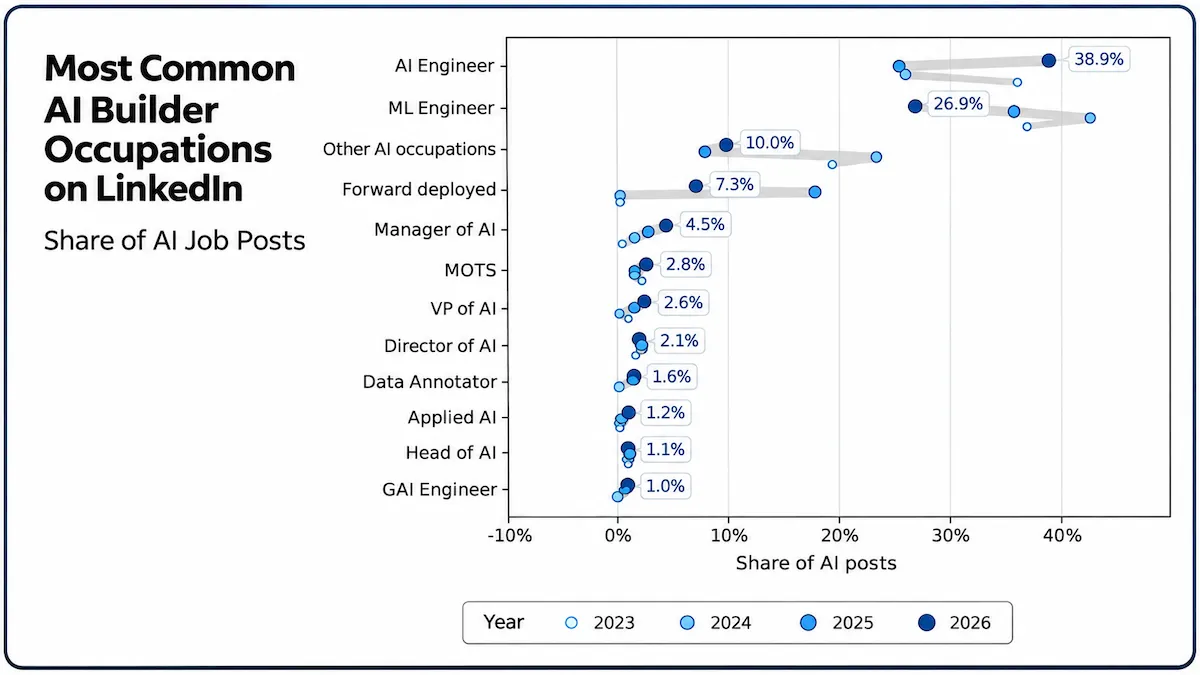
LinkedIn data shows that AI has helped create 2 million jobs.
Dear friends,
LinkedIn data shows that AI has helped create 2 million jobs. Further, AI Engineer is among the top 10 fastest-growing jobs in seven major economies. I know many people are worried about job loss — and there have been painful layoffs. At the same time, the LinkedIn data undermines the jobpocalypse story that AI is leading to massive unemployment. Of the many jobs AI is creating, I think some of the most interesting are engineers being embedded in other functions (like marketing, HR, finance, and so on) to create workflow automations and help them take advantage of AI.
It is beneficial for everyone — not just developers — to learn to build software applications with AI assistance. Still, a developer with AI Engineering skills can do a lot that someone without those skills cannot. Before coding agents, some teams occasionally embedded an engineer in, say, a marketing team. But engineering productivity was lower, and one engineer’s ability to move the needle was limited. Now that AI Engineering has made developers more productive, embedding an engineer in some other function makes much more sense.
For example, AI-savvy engineers can help other teams:
- Implement workflow automations
- Create dashboards, perform data analysis, and present insights
- Build data infrastructure
- Build custom applications (or help buy and integrate third-party ones)
- Learn AI engineering and AI usage so that they can do more for themselves
Some of my teams have embedded AI engineers in marketing, recruiting, finance, and other departments. It’s always interesting for engineers to learn about other functions, and those other teams end up with not just better systems but also significantly improved knowledge of AI. In addition, the number of ideas they end up wanting to build always outstrips the capacity of the embedded engineers (because the bottleneck is not coding, but product management, workflow redesign, and other tasks such as judgement tasks, which still take a significant amount of human effort).
Looking across many businesses, the opportunities for AI engineers to make a difference seem endless. I write this from Silicon Valley, where people who are skilled in AI engineering are in great demand. As AI adoption spreads, I expect global demand for people with AI engineering skills to keep growing.
Keep building!
Andrew
P.S. To build your AI engineering skills, please consider joining me and 2000 other AI engineers and builders in person at AI Dev in New York City, November 30th-December 1st! We have a great speaker lineup including Yann LeCun and many others. Get tickets here: AI Dev at DeepLearning.AI