Qwen-Image-2.1 goes open weights: Gemini 3.8 Live, now with Extended Thinking mode
Devin’s SWE-2 Cognition model is a capable sidekick. Astra for Law brings top-shelf AI to legal work. Don’t let top AI companies dictate the rules, CEO says. Study questions wisdom of blanket AI bans in education.

In today’s edition of Data Points, you’ll learn about our top headlines, and more:
- Devin’s SWE-2 Cognition model is a capable sidekick
- Astra for Law brings top-shelf AI to legal work
- Don’t let top AI companies dictate the rules, CEO says
- Study questions wisdom of blanket AI bans in education
But first:
Qwen’s open image generator and editor awaits full evaluation
Alibaba released Qwen-Image-2.1, an open weights image generation and editing model with 7 billion parameters in its visual generation component. The model unifies text-to-image generation and editing in one system, natively supports generating and editing transparent images, and Alibaba says it improves fidelity for preserving faces and product details across edits. It supports local editing through circles, painted annotations, or separate masks, and accepts up to 10 reference images for tasks like virtual try-on or group portraits. Alibaba’s Qwen-Image-Bench results claim the model outperforms most closed-source models, but the benchmark is the company’s own and not independently verified. The compact size and support for transparent layers give developers a lighter weight, self-hostable alternative for design and e-commerce image tasks that previously required larger or closed models. (Qwen)
Google challenges OpenAI with new voice agent models
Google released two new voice-to-voice models, Gemini 3.8 Live and Gemini 3.8 Live Extended Thinking, aimed at building real-time voice agents. The Extended Thinking model tops Artificial Analysis’s Speech to Speech Quality Index at 82.6, scores 68.6% on the τ-Voice agentic benchmark and 97.7% on Big Bench Audio, and can reason and speak simultaneously while narrating multi-step background tasks. The standard 3.8 Live model detects and switches between 97 languages mid-conversation, processes visual input in near real-time, and runs tool calls in the background without interrupting dialogue. Google says it ranks second in the Speech Agent Arena. Both models are available now through the Gemini API and Google AI Studio, with enterprise access via Gemini Enterprise and consumer access through Search Live, Gemini Live, Workspace, and Gmail; all generated audio carries a SynthID watermark. Developers building voice interfaces can choose between a cheaper, high-throughput model and a slower, more capable reasoning model depending on task complexity, both from Google. (Google)
Devin Fusion pairs top models like Fable with an inexpensive helper
Cognition released Fusion, a coding agent architecture that pairs a frontier “lead” model with a cheaper “sidekick” model. Instead of routing tasks to different models based on difficulty, Fusion runs two persistent agents in parallel: the lead owns planning, ambiguous decisions, and review, while the sidekick explores code, implements changes, and runs tests, exchanging only briefs and results rather than full conversation history. When pairing models such as Fable 5.1 or Astra with a sidekick called SWE-2 Cognition, working with Artificial Analysis and Vals AI, reports cost cuts of 11% to 46% across benchmarks like DeepSWE, Terminal-Bench, and Vals Code Migration, while holding or improving scores. The company also found that pricier sidekicks and leads can lower total cost, since stronger models need fewer correction rounds and tokens overall, meaning per-token pricing alone misrepresents actual cost. Developers can install Fusion now via the Devin CLI or Devin Desktop. (Cognition)
OpenAI introduces dedicated product to compete in legal AI
OpenAI introduced Astra for Law, a product aimed at legal work built on its frontier AI models. It combines custom workflows for law firms, connections to legal data sources, and controls meant to handle confidential client information. The announcement describes the product’s intended purpose but does not detail pricing, availability, or which underlying models power it. OpenAI frames it as a legal-specific version of its broader enterprise push into industry-tailored AI tools. The release follows new models from Harvey and Thomson Reuters specifically designed for legal work. (OpenAI)
Cohere CEO argues against letting big companies set AI policy
Cohere co-founder and CEO Aidan Gomez published an essay opposing a roadmap from Anthropic CEO Dario Amodei that asks governments for antitrust exemptions, letting a small group of leading AI labs jointly set safety standards and the pace of development. Gomez compares the plan to cases where government-blessed gatekeepers entrenched incumbents rather than improving safety: the SEC’s 1975 designation of three bond-rating agencies (which later rated subprime mortgages triple-A before the 2008 crash) and the EU’s 1985 Motor Vehicle Block Exemption, which took about 25 years to unwind. He argues the proposal’s entry requirements, including massive compute, dedicated security teams, and resident evaluators, would favor companies already at the top of the market. Instead, Gomez proposes an internationally developed risk framework, mandatory transparency including incident reporting, testing limited to evidence-backed risks like cyberattacks or bioweapons rather than blanket audits, and independent assurance modeled on aviation and financial-sector oversight, with auditors barred from being paid by the companies they review. (Cohere)
Study shows that chatbot bans may hurt students more than help
A two-year study by Vrije Universiteit Amsterdam law professor Thibault Schrepel found that students banned from using ChatGPT consistently performed worse than those who used it, whether trained or untrained. Schrepel split students in his “Law of AI” course into three groups—no AI access, unguided AI suggestions, and structured training in legal prompt engineering—and had them revise provisions of the EU AI Act, running the experiment with 66 students in 2024 and 164 in 2025. The no-AI group ran out of ideas within 10 to 15 minutes and mostly made superficial wording changes, while the trained group’s advantage on exams largely disappeared by 2025 as general chatbot familiarity grew among students. Schrepel says he expected the unguided-AI group’s uncritical errors to carry into exams, but they didn’t, a result that made him abandon his assumption that AI needs formal instruction to help rather than harm learning. The findings run counter to policies like UC Berkeley Law’s near-total ban on AI in graded work. Schrepel argues universities should let instructors experiment rather than impose blanket bans, while cautioning that his sample was small and drawn from tech-savvy students already interested in AI. (The Decoder)
Want to know more about what matters in AI right now?
Read the latest issue of The Batch for in-depth analysis of news and research.
Last week, Andrew talked about overhyped fears surrounding AI dangers, AI’s growing cybersecurity capabilities, and the need for responsible engineering rather than a blanket ban on (or slowdown of) AI development.
“Pausing AI progress will create much more harm than benefit. First, our adversaries will certainly not slow down. Second, engineering requires discovering problems empirically so we can fix them. If we pause AI by a decade, we will also delay finding and implementing safety engineering fixes by about the same duration.”
Read Andrew’s letter here.
Other top AI news and research covered in depth:
- Meta’s Muse Agent is using your accounts and payments to take action, with a security architecture designed to protect against abuses.
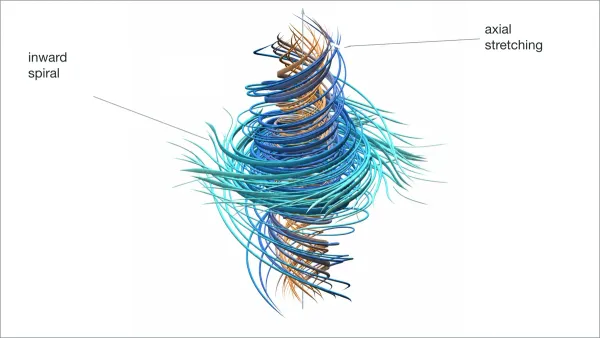
- OpenAI agents have solved a version of the Navier-Stokes fluid equations problem, sparking disputes over this landmark agent-driven mathematical proof.
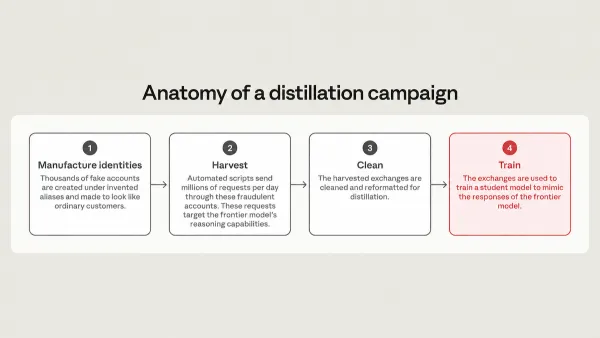
- Anthropic reports that some Kimi and DeepSeek users were served Claude instead, highlighting cases of adversarial distillation, gray-market transfers, and potential fraud.
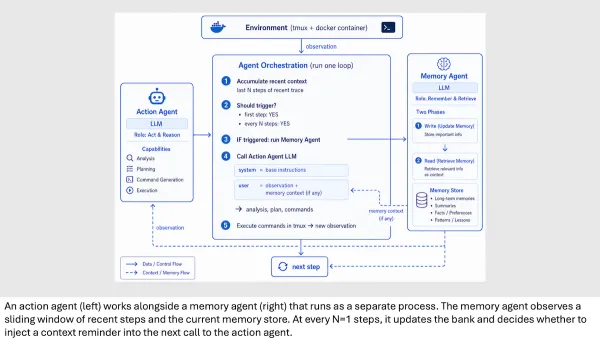
- New research shows that even agents benefit from reminders, with one agent acting as a memory surrogate for another.
A special event for our community
AI Dev brings together developers who build with AI every day. You'll hear from engineers at the companies shipping agents, models, and infrastructure, then meet them in person on the demo floor. Join us in New York City on November 30 and December 1.
Data Points is produced by human editors with AI assistance.