
DeepSeek-V4.1-Flash’s new architecture: Fugu matches frontier performance at lower cost
Open letter on AI models’ mathematical proofs. GPT-Live-1 brings full duplex voice to the API. Improving document recognition models. A NASA-built scientific model for the moon.
In today’s edition of Data Points, you’ll learn about our top headlines, and more:
- Open letter on AI models’ mathematical proofs
- GPT-Live-1 brings full duplex voice to the API
- Improving document recognition models
- A NASA-built scientific model for the moon
But first:
DeepSeek’s latest Flash model is a bigger update than it seems
DeepSeek AI released DeepSeek-V4.1-Flash, a multimodal Mixture-of-Experts model with 552 billion backbone parameters, 196 billion additional Engram parameters, and a 1 million token context window, activating 8 billion parameters during prefill and 16 billion during decode. Its main innovation is a global KV cache (the memory storing past attention keys and values during inference) of just 890 bytes per token — a quarter the size of DeepSeek-V4-Flash’s and 437 times smaller than DeepSeek-V1’s — achieved through a split encoder-decoder architecture, layer-sharing sparse attention, and FP4 quantization. Weights ship under an MIT license with support for vLLM, SGLang, and Transformers, plus a public API with low, high, and max reasoning tiers. DeepSeek reports it beats Anthropic’s Opus-5 and OpenAI’s GPT-5.6 Sol on Terminal-Bench 2.1 (90.6 vs 89.1 and 88.8) and DeepSWE v1.1, though it trails both on Terminal-Bench 4.0 and GPQA Diamond. The smaller KV cache makes long-context, agentic workloads cheaper to serve; the MIT license makes it self-hostable. (MarkTechPost)
Sakana updates its Fugu fusion models, delivering frontier performance at lower costs
Sakana AI released Fugu Max and Fugu Ultra v2, models that route tasks across a pool of AI models rather than functioning as single foundation models. Fugu Max targets cost, at $2 per million input tokens and $6 per million output tokens — 40 to 60 percent below Sonnet 5, GPT 5.6 Terra, and Kimi K3 on output, Sakana says — and tops six benchmarks including Terminal Bench 2.1 and GPQA Diamond. Fugu Ultra v2 targets harder reasoning and coding, scoring 48.3 on Chartography visual reasoning versus 27.3 for Opus 5, and 74.3 on DeepSWE. Both are available through an OpenAI-compatible API; no open weights, and the service excludes the EU/EEA. The routing approach lets developers get near-frontier results without locking into one vendor, though several cited benchmarks (including SWEFish) are Sakana’s own and unverified externally. (MarkTechPost)
Mathematicians argue that tech companies misunderstand mathematical progress
Twenty-five Fields Medal winners, including Terence Tao, Peter Scholze, and Maryna Viazovska, signed a declaration arguing that AI companies’ use of famous unsolved math problems as benchmarks is damaging mathematics as a discipline. LLMs have improved enough to solve major outstanding problems, the signatories say, but companies announce solutions rapidly, without proper writeups, attribution, or the verification and integration into the mathematical canon that has traditionally followed such breakthroughs. Solving problems is only a proxy for conceptual understanding, they argue, and mass-producing true/false answers risks destroying the community structures — mentorship, talks, peer discussion — that turn new results into lasting knowledge. The statement, posted at mathandai.org and modeled on the Leiden declaration, is open for further signatures and frames the issue as part of a broader misalignment between AI’s capabilities and the goals of scientific and creative professions. (Terry Tao)
OpenAI releases full duplex voice model to the API
OpenAI released GPT-Live-1, a voice model that listens and speaks simultaneously rather than chaining separate speech-to-text, reasoning, and text-to-speech models. It handles interruptions and background noise within a single model, delegating deeper reasoning and tool calls to a backend such as GPT-6 Astra, and supports telephony deployments for phone-based customer support. OpenAI reports a 30-percentage-point improvement on Full Duplex Bench over GPT-Realtime-2.1 and first place on Tau3 when paired with GPT-6 Astra; Speak’s early evaluation showed an 80 percent cut in interruptions versus turn-based systems. Pricing is $0.05 per minute for the voice layer, with backend model and tool costs billed separately; it natively supports ASR transcripts, keyword biasing, and turn detection. For voice app developers, it removes the latency and coordination overhead of stitching together separate STT, LLM, and TTS components. (OpenAI)
Applying agents to document recognition and information extraction
LandingAI released Agentic Document Extraction (ADE) Gen2, rebuilding its document intelligence stack around a new model family called DPT-3. Parsing splits across two models: DPT-3 Verity deterministically transcribes digital text with per-word confidence scores at roughly 40 percent of the cost, while DPT-3 Pro handles layout, scanned pages, handwriting, and non-Latin scripts with line-level grounding. Pricing moves from a flat 3 credits per page to a page fee plus a per-1,000-character fee, with a priority tier for real-time use and a standard tier at half price for async jobs; LandingAI claims 25 to 80 percent cost reductions on mixed workloads but notes dense pages can cost more than before. The response format replaces flat chunks with a document-page-block tree carrying stable IDs, standardized markdown, and grounding data down to bounding boxes and word-level confidence, enabling coordinate-based redaction and citation-backed extraction. (Disclosure: LandingAI is part of the DeepLearning.AI ecosystem.) (MarkTechPost)
IBM partners with NASA for a model that maps features of the moon
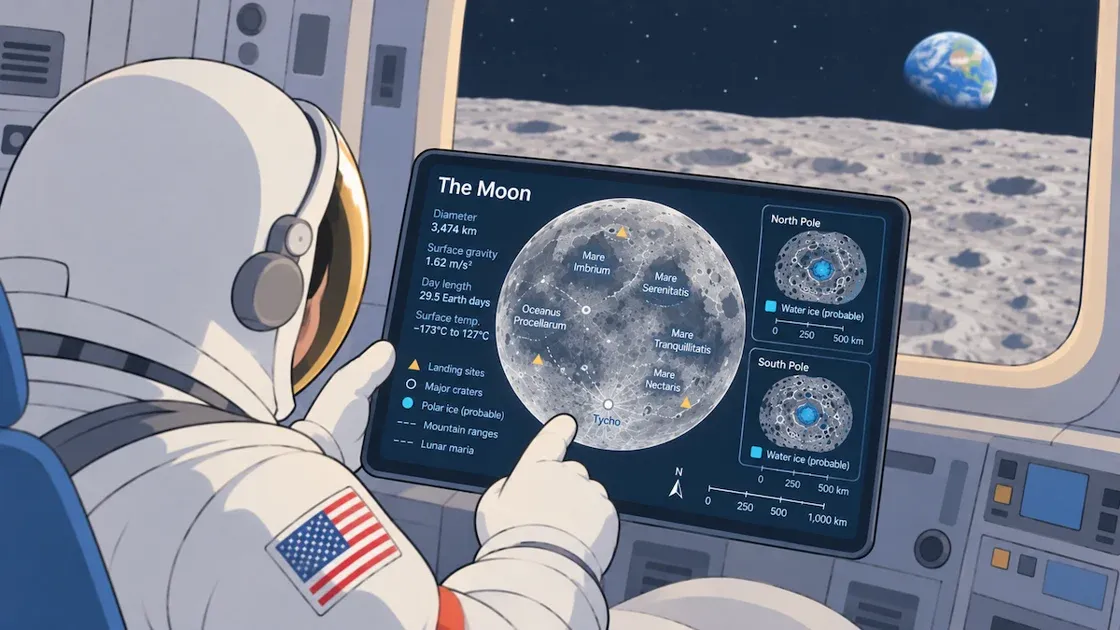
IBM and NASA released the NASA-IBM Lunar Foundation Model, an open-source model combining decades of lunar data from US and Japanese missions. Built on IBM and ESA’s TerraMind architecture, it merges measurements across scales and viewing angles — from GRAIL’s 20-kilometer-per-pixel gravity maps to the Lunar Reconnaissance Orbiter’s 1-meter-per-pixel surface images — to identify small craters, trace volcanic history, and locate polar ice. Fine-tuned with low-rank adapters that keep 90 percent of base weights frozen, it reduced ice-detection error by 22 percent versus a SwinV2 transformer and beat a task-specific model by nearly 19 percent on crater detection using half the training data. The model is on Hugging Face. It follows IBM’s Earth-observation and solar models as another domain-specific foundation built for lightweight fine-tuning rather than per-task retraining. (IBM)
Want to know more about what matters in AI right now?
Read the latest issue of The Batch for in-depth analysis of news and research.
Last week, Andrew discussed software engineers’ evolving role in shaping AI-driven development, emphasizing the importance of reacting to user feedback, making product decisions, and developing communication and leadership skills.
“Before modern AI tools accelerated and expanded what a single developer could do, tech companies established the practice of having product managers (PMs) and designers specify what should be built and then developers build it… When you’re skilled at AI Engineering, your best work won’t be merely implementing a product that someone else spec’ed out. Instead, you will actively shape the build.”
Read Andrew’s letter here.
Other top AI news and research covered in depth:
- OpenAI’s latest model, GPT-6 Astra Is A Star, excels in computer use, front-end engineering, and general knowledge.
- Anthropic’s Claude Fable 5.1 is an agentic powerhouse, maintaining its position as a leading AI model.
- Transcription Battles Heat Up as Google, Meta, and Microsoft release advanced speech-to-text models for agentic input.
- Researchers developed SelfCompact, an agentic tool and harness for improved context management in AI systems.
A special event for our community
AI Dev brings together developers who build with AI every day. You'll hear from engineers at the companies shipping agents, models, and infrastructure, then meet them in person on the demo floor. Join us in New York City on November 30 and December 1.
Data Points is produced by human editors with AI assistance.


