Meta’s Muse Wonder rivals top models: Inside Amazon’s warehouse robotics operations
Microsoft says it will use own chips for Copilot, MAI. Gemini 4 Argon generally available. Python 3.15 is official, Python 3.10 no longer supported. Character.AI declares bankruptcy.
In today’s edition of Data Points, you’ll learn about our top headlines, and more:
- Microsoft says it will use own chips for Copilot, MAI
- Gemini 4 Argon generally available
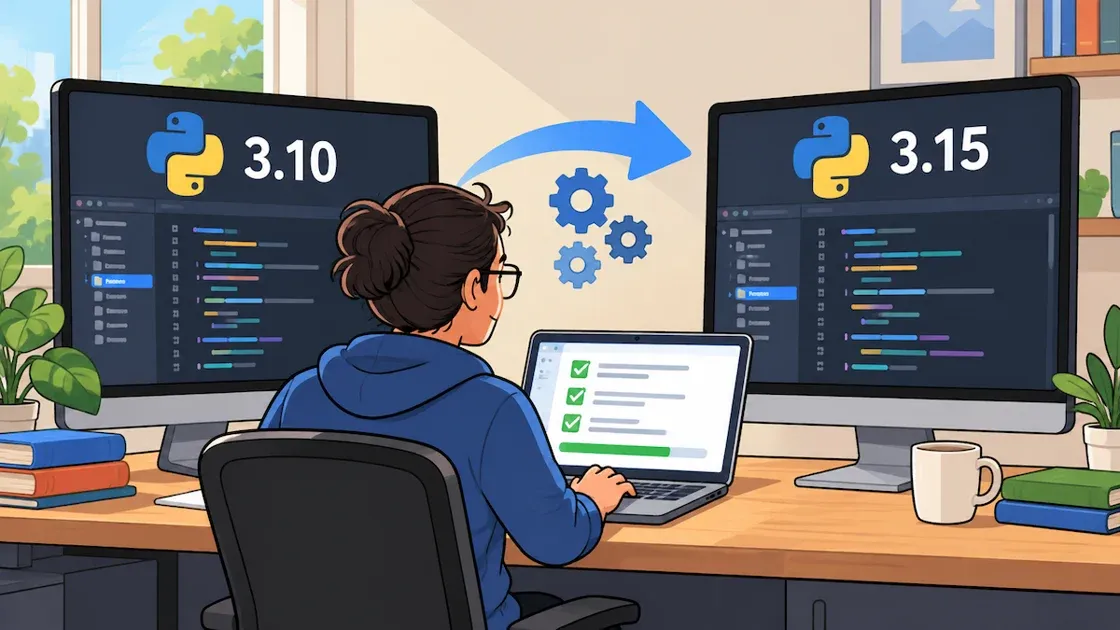
- Python 3.15 is official, Python 3.10 no longer supported
- Character.AI declares bankruptcy
But first:
Muse Wonder and Wonder Full bring Meta back to frontier
Meta released Muse Wonder and Muse Wonder Full, two closed-weight models for long-running agent work such as coding, legal and finance tasks, and computer use. Both take text, image, video and audio input, return text, and have a 1 million-token context window. Muse Wonder is available through the Meta Model API at $4 per million input tokens and $20 per million output tokens, using an OpenAI-compatible Responses endpoint, and through the Muse Code CLI. Muse Wonder Full is limited to Muse Code plans at $50 or $200 per month. In Meta’s own benchmark table, Muse Wonder Full leads 6 of 14 rows, including DeepSWE 1.1 (79.0) and SWE-Marathon (57.5), while Claude Opus 5.5 leads ProgramBench (70.5 against 59.0), OSWorld and Terminal-Bench. Because the API matches OpenAI’s SDK format and its listed price equals Claude Opus 5.5’s, developers can trial Muse Wonder by changing a base URL and model name. Meta has not disclosed parameter counts (typical for a closed model) or a full safety report (this is less typical). (MarkTechPost)
How Amazon is developing its huge robotics fleet
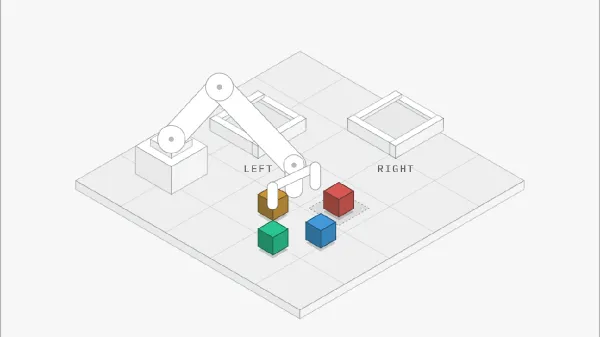
Amazon operates more than 1 million warehouse robots, mostly wheeled mobile units, and plans to grow the fleet with new robot factories in Austin, Texas, and Greenwood, Indiana. It also employs more than 1.5 million people, making it the world’s second-largest corporate employer. The newer robotic arms (Robin, Cardinal, Sparrow, Vulcan) rely on machine learning: a 2023 Amazon paper reported a 93.73 percent pick success rate for a learned model versus 92.28 percent for the best hand-coded algorithm, and Sparrow uses foundation models to handle hundreds of millions of product types. Amazon says the robots take over the riskiest tasks, but a 2025 ILR Review study of 2016-2019 data found robotic warehouses had 40 percent fewer severe injuries and 77 percent more minor strain injuries, which coauthor Brian Greenwood links to the faster work pace robots set. The arm progression shows how deployed physical AI is moving from per-product, per-robot hand-coding to general models, with small accuracy gains paying off at warehouse scale. (Ars Technica)
Maia chips are ready for prime time, says Microsoft
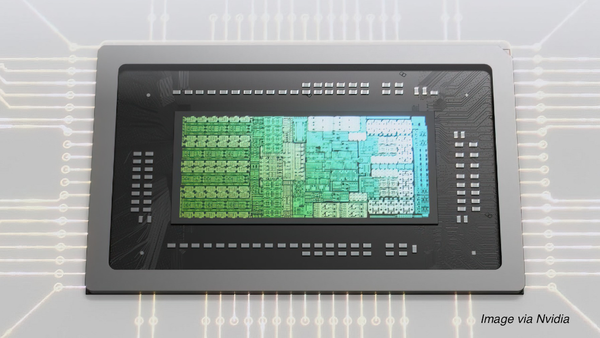
Microsoft said it will scale its in-house Maia chip family to multi-gigawatt deployments starting next calendar year, making Maia the primary inference system for its own products and services. It also introduced Maia 300, which Microsoft says delivers 40 percent more tokens per watt than leading GPU-based systems. Maia 200 is already deployed in the US, Europe, and Australia, where Microsoft reports up to 1.7 times more tokens per watt in Teams and Copilot. Microsoft’s plan to run its own inference on Maia suggests it intends to rely less on GPU vendors for Copilot and Teams capacity. The post gives no benchmark methodology, comparison hardware, release date, or pricing, and does not say whether Maia will be offered to outside customers. (Microsoft via LinkedIn)
Gemini 4 Argon available to general public, with more details
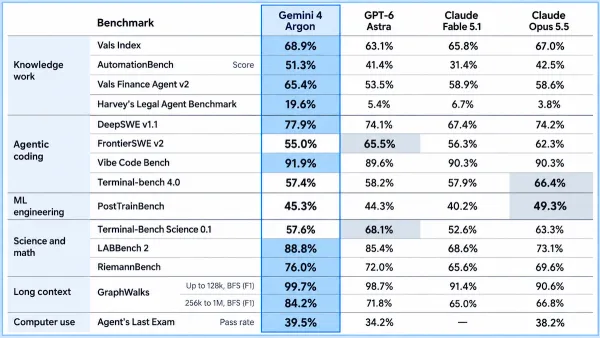
Google DeepMind released Gemini 4 Argon, a sparse mixture-of-experts model with a 1M-token output limit, up from 64K on earlier Gemini models. Input and output share one 1M-token window, so a long prompt shrinks the room left for output, and long responses use a continuation protocol described in Google’s docs. Introductory API pricing is $2 input and $10 output per million tokens, rising to $4 and $20 after November 30, 2026, compared with 4/20 for Claude Opus 5.5 and 10/50 for GPT-6 Astra. In Google’s own table Argon leads on DeepSWE v1.1 (77.9%) and the Vals Index (68.9%, ranked by Vals AI), but it places last of four on FrontierSWE v2 (55.0%) and Terminal-Bench 4.0 (57.4%). Developers who need very long generated output, such as full code or document generation, can now get it in a single call instead of splitting work across requests. (MarkTechPost)
How to plan for the new Python version
Python 3.15 is now officially released, and Python 3.10 is no longer supported. The release adds explicit lazy imports (PEP 810), written as lazy import json, which defer loading a module until its first use; unpacking inside comprehensions (PEP 798), such as [*L for L in lists]; and a sampling profiler, profiling.sampling (named Tachyon), in the standard library. The old tracing profiler cProfile is now profiling.tracing. Miguel Grinberg’s benchmarks of 3.15.0rc3 found speed about the same as 3.14, except the experimental just-in-time compiler, which ran a Fibonacci test 1.2x faster than the standard interpreter. For developers who support every maintained Python version, 3.10’s end of life means they can drop it and rely on 3.11 features such as tomllib, asyncio’s TaskGroup and timeout(), and new sqlite3 methods, while lazy imports offer a built-in way to cut startup cost from heavy dependencies. (Simon Willison’s Blog)
Character.ai overspent into bankruptcy, seeks buyer
Character.ai has filed for voluntary Chapter 11 bankruptcy to run a court-supervised sale of all or substantially all of its assets. The company cites “significant legal, regulatory, and operational headwinds” over the past year and does not give figures on debt, revenue, or users. It expects the sale to finish by late November or early December 2026, and says the platform will be wound down if no workable bid emerges. For now the service stays up, paid subscriptions remain active with billing unchanged, and users can delete their accounts or export their data through the app or website. Developers building with or depending on Character.ai have no guarantee of continuity until a buyer is named, so a fallback plan is prudent. (Character.ai)
Want to know more about what matters in AI right now?
Read the latest issue of The Batch for in-depth analysis of news and research.
Last week, Andrew talked about the underestimated need for data center build-outs to support the increasing demand from agentic workflows. He also discussed the impact of agents on web search and analytics workloads and the necessity to optimize the software stack for these new demands.
“Building data centers — which are incredibly energy- and water-efficient for the work that they do — will be a key part of this effort. Unfortunately, the anti-data center movement, which has become a rallying point for a large number of people that distrust AI technology, do not like its impact, and want to slow it down, is making it much harder to build capacity.”
Read Andrew’s letter here.
Other top AI news and research covered in depth:
- OpenAI’s GPT-6.1 Sol shines as the star of DevDay, along with Dots agents and new ChatGPT features.
- Google’s Gemini 4 Model, Argon, sets a new standard for low-hallucination AI, excelling in knowledge work.
- Black Forest Labs’ Flux 3 Action leverages video training to conrol robots through a World-Action Model.
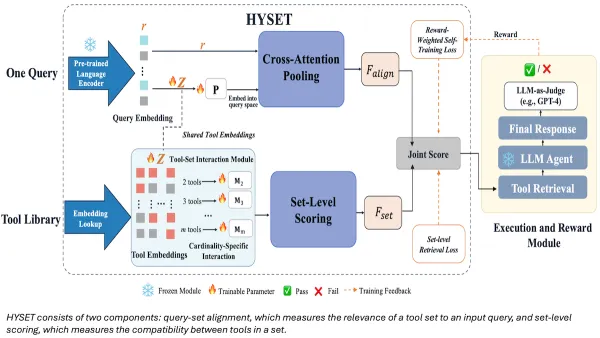
- Researchers introduced HYSET, a novel technique for orchestrating tool collections to optimize task performance.
A special event for our community
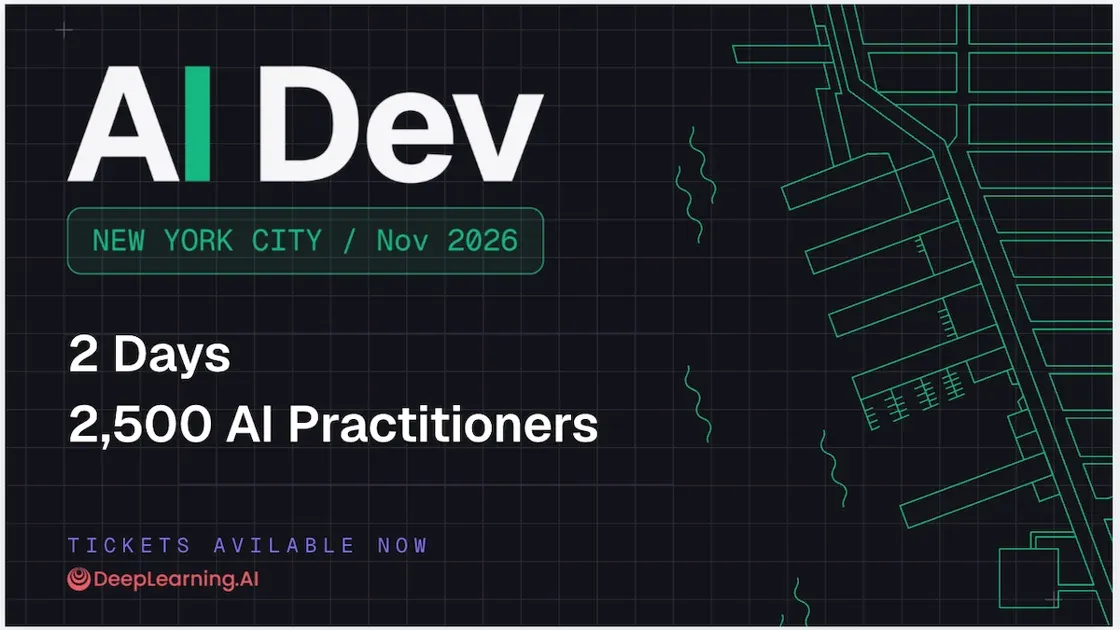
AI Dev brings together developers who build with AI every day. You'll hear from engineers at the companies shipping agents, models, and infrastructure, then meet them in person on the demo floor. Join us in New York City on November 30 and December 1.
Data Points is produced by human editors with AI assistance.