Anthropic gives Claude Haiku a big update: Microsoft-Decision-1 responds to Jev and OpenAI
OpenAI accounting projects $50B annual revenue. Nvidia and Microsoft team up on Windows laptops. Microsoft announces AI-optimized mini-desktop. OpenAI responds to criticism of ChatGPT for Teens.
In today’s edition of Data Points, you’ll learn about our top headlines, and more:
- OpenAI accounting projects $50B annual revenue
- Nvidia and Microsoft team up on Windows laptops
- Microsoft announces AI-optimized mini-desktop
- OpenAI responds to criticism of ChatGPT for Teens
But first:
Claude Haiku update comes with a performance boost and price cut
Anthropic released Claude Haiku 5.5, its small, fast model aimed at high-volume tasks like summarization, classification, and database queries. It’s the first Haiku model with an adjustable effort setting to trade off cost against intelligence. For prompts up to 100,000 tokens, input costs drop to $0.10 per million tokens and output to $0.50 per million, versus $1.00 and $5.00 for Haiku 4.5 — roughly 90 percent cheaper for the bulk of requests, which Anthropic says covered about 90 percent of Haiku 4.5 traffic. On benchmarks, Haiku 5.5 scores far above Haiku 4.5 (for example, 72.4 percent versus 15.7 percent on the OSWorld computer-use test) and ahead of GPT-6 Luna on several tasks, though it still trails Sonnet 5.5 on complex agentic coding benchmarks like Terminal-Bench 4.0 (39.2 percent versus 70.6 percent). Anthropic also cut Sonnet 5.5’s cache-read price in half, lowering some agentic costs by about 20 percent. The company is also adding monthly API credits ($100-$500) for Max and Team subscribers plus beta SDK support for computer use and browser use. Claude Haiku 5.5 is available now on the Claude Platform, AWS, Google Cloud, and Azure, giving developers a cheaper option for narrowly-scoped or subagent work that was previously too costly to run on Claude. (Anthropic)
A speedy Jev-like decision model from Microsoft
Microsoft released Microsoft-Decision-1, a decision-scoring model post-trained from Qwen3.5-9B. Given a fixed set of options (yes/no, multiple choice, ratings, or rubric grading), it returns a calibrated probability for each in a single pass through a structured API call. Microsoft says it scored highest in accuracy across a 36-benchmark comparison of nearly 150,000 questions kept blind from training, and ran 2.5 times faster than the runner-up, H2O-Lightning-4B v1.1, and 35 times faster than GPT-6 Sol. The company also reports that its decision flips on 1.3 percent of input perturbations such as reordered options, that Xbox Research found it comparable to GPT-6 Sol on labeling quality while 200 times cheaper. Microsoft said it plans to rebase future versions on MAI and OpenAI models. Input costs $0.042 per million tokens and output is free, so developers can run classification, routing, and agent-gating steps on a small, low-cost model instead of a general LLM. So far, all benchmark figures come from Microsoft. (Microsoft)
OpenAI revises revenue estimates, postpones public offering
OpenAI’s annualized revenue run rate is approaching $50 billion, people familiar with the matter told Bloomberg, up from over $40 billion in August but well below the nearly $70 billion figure some outlets reported last month. The Financial Times, which first reported the new estimate, said the discrepancy stems from OpenAI investors adjusting how they calculate the figure to compare more directly with rival Anthropic, including how sales through cloud providers are counted. Annualized revenue is a projection of yearly sales based on a shorter recent period, and companies don’t all calculate it the same way; Anthropic’s hit $65 billion by the end of July. Subsequent reports say that Anthropic and OpenAI still calculate cloud partner revenue differently. Currently, OpenAI is in talks to raise $30 billion or more at a $1.4 trillion valuation, and has said it no longer expects to IPO this year. Public companies offer more transparency into their business, and OpenAI declining to go public this year could mean smaller AI companies may follow suit. (Bloomberg)
Nvidia, Microsoft, partners launch AI-optimized laptops
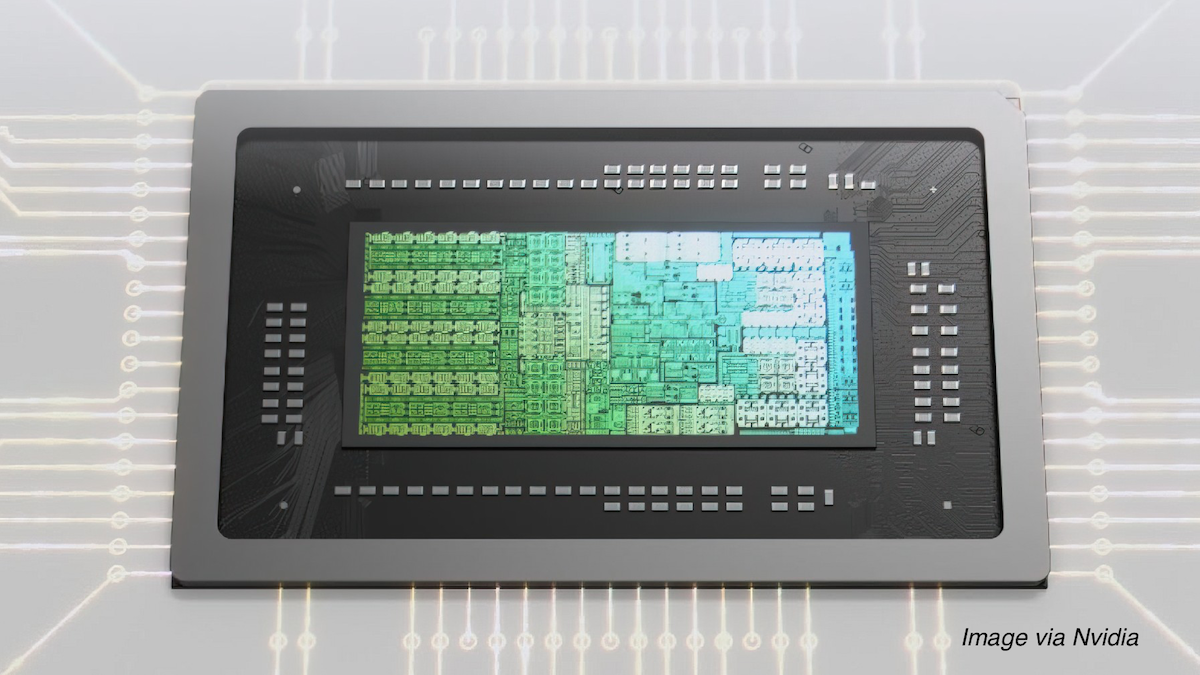
Microsoft announced pricing and availability for the Surface Laptop Ultra, a new AI-focused laptop built on an Nvidia chip, saying it beats Apple’s MacBook Pro M5 on multiple AI model tasks. Microsoft executives claimed the device returns prompts from locally run AI models twice as fast as (and generates videos six times quicker than) a comparable Apple machine. The Ultra starts at $2,599, about $400 less than the entry-level 16-inch MacBook Pro, and ships soon. Nvidia CEO Jensen Huang joined Microsoft CEO Satya Nadella to promote the chip, which also powers devices from Dell and HP. Developers weighing local inference hardware now have a Windows-based alternative to Apple-designed chips. However, Microsoft’s performance claims come from its own comparisons and haven’t been independently verified. (Bloomberg)
Microsoft uses Nvidia chips for a Mac Studio competitor
Microsoft opened preorders for its Surface RTX Spark Dev Box, an AI-focused mini PC priced at $5,999 and shipping in November. It runs on Nvidia’s Arm-based RTX Spark platform with 128GB of unified memory and a 100-watt thermal envelope. Microsoft says the machine can run local AI models exceeding 120 billion parameters for tasks like testing models, prototyping AI agents, or running coding tools on-device. As one of Microsoft’s Project Zenith devices, it ships with a developer-optimized Windows 11 Pro setup preloaded with Visual Studio Code, Git, GitHub CLI, GitHub Copilot, WSL, Python, and Node. The price is higher than Nvidia’s own DGX Spark mini PC, which Microsoft attributes partly to ongoing RAM and component shortages driving PC prices up industry-wide. (The Verge)
Watchdog calls for better guardrails on ChatGPT for Teens
The Youth AI Safety Institute designated OpenAI’s ChatGPT for Teens an “Unacceptable Risk” and called for it to be restricted to users 18 and older until its guardrails improve. The group, part of Common Sense Media, tested over 4,000 prompts on accounts registered to 13- to 17-year-olds and found the bot failed to recommend crisis resources more than one in four times during conversations about suicide, self-harm, or disordered eating, and sent zero parent alerts for newly created accounts. Testers also said the bot disobeyed instructions, failed to switch some accounts to under-18 protections even after being told the user was 13, and had homework-answer guardrails that were easily bypassed. OpenAI disputed the methodology, saying testing may have started before parental controls were fully activated, and asked for a retest with a larger sample. Concurrently, OpenAI announced content updates to ChatGPT for Teens, including a college-application tool called College Planner and a three-year partnership with Boston Children’s Hospital’s Digital Wellness Lab. The controversy shows some of the difficulties companies face in expanding the AI market to new audiences while still offering young users highly capable services. (The Wall Street Journal)
Want to know more about what matters in AI right now?
Read the latest issue of The Batch for in-depth analysis of news and research.
Last week, Andrew talked about the underestimated need for data center build-outs to support the increasing demand from agentic workflows. He also discussed the impact of agents on web search and analytics workloads and the necessity to optimize the software stack for these new demands.
“Agents will drive significant transaction volume across many applications, transaction types, and sectors of the economy. Many businesses will have to redesign their systems to handle this increased scale. And to make this possible, we will need significantly more data centers that provide compute, storage, and networking.”
Read Andrew’s letter here.
Other top AI news and research covered in depth:
- OpenAI’s GPT-6.1 Sol shines as the star of DevDay, along with Dots agents and new ChatGPT features.
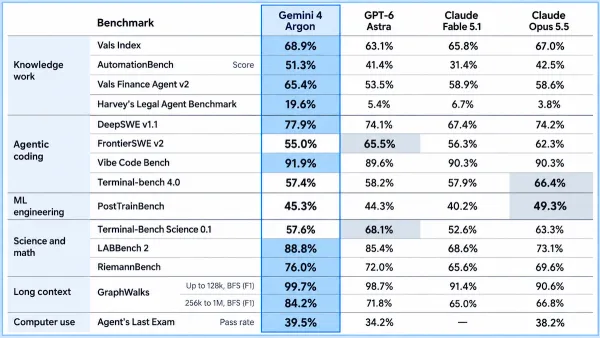
- Google’s Gemini 4 Model, Argon, sets a new standard for low-hallucination AI, excelling in knowledge work.
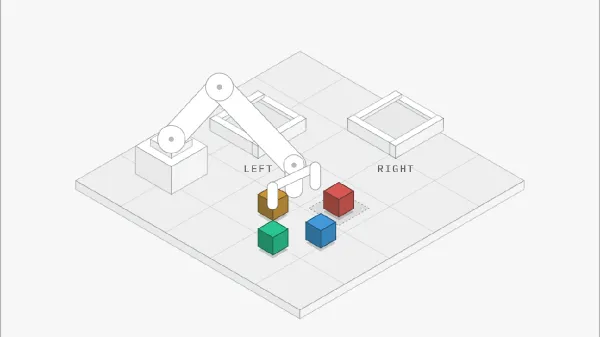
- Black Forest Labs’ Flux 3 Action leverages video training to conrol robots through a World-Action Model.
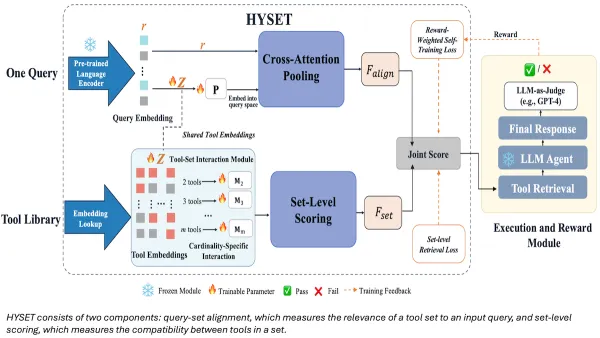
- Researchers introduced HYSET, a novel technique for orchestrating tool collections to optimize task performance.
A special event for our community
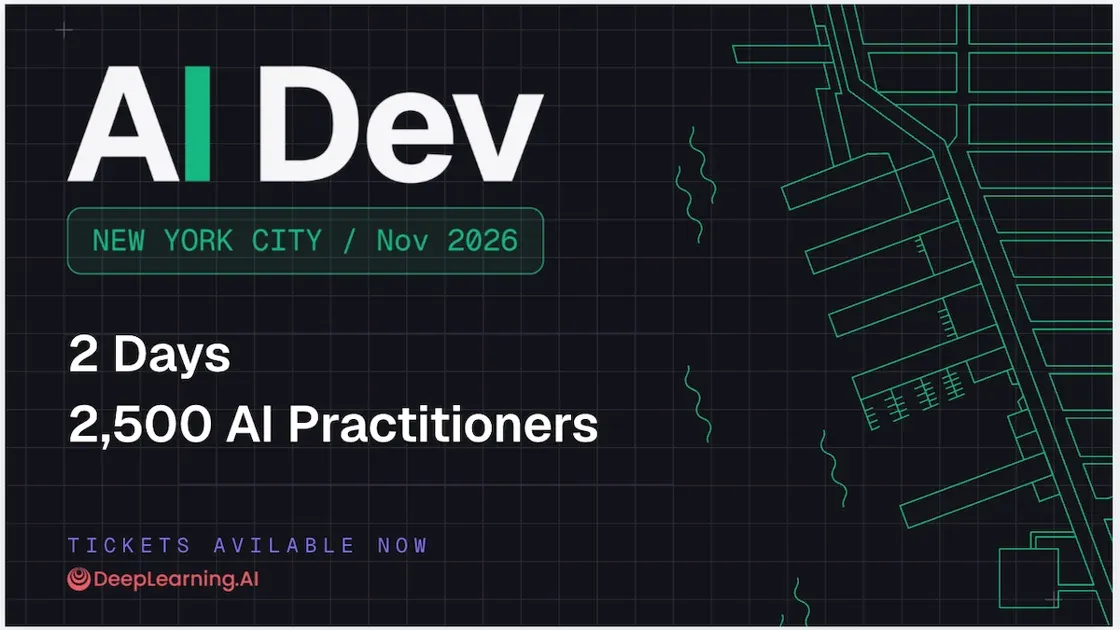
AI Dev brings together developers who build with AI every day. You'll hear from engineers at the companies shipping agents, models, and infrastructure, then meet them in person on the demo floor. Join us in New York City on November 30 and December 1.
Data Points is produced by human editors with AI assistance.