All the fallout so far from Nvidia CEO’s affair: Inkling 2 Small jumps 18 points on Intelligence Index
GPT-6 Cyber scores 48.5 percent on ExploitGym. Decision Index v2 weighs decision models’ accuracy, cost. Pangram releases its first AI image, video detectors. Nous reveals open Alibaba models’ shallow political alignment.

In today’s edition of Data Points, you’ll learn about our top headlines, and more:
- GPT-6 Cyber scores 48.5 percent on ExploitGym
- Decision Index v2 weighs decision models’ accuracy, cost
- Pangram releases its first AI image, video detectors
- Nous reveals open Alibaba models’ shallow political alignment
But first:
Nvidia’s Jensen Huang under fire for affair with alleged spy
Nvidia’s board has opened an independent investigation after CEO Jensen Huang admitted on Nov. 8 to an affair, confirming reports that linked him to Alice Huang, a Megaspeed International executive. The New York Times reported on Nov. 6 that a Trump administration memo cited intelligence that a Chinese spy agency had recruited her to collect information about him; Beijing called a similar report “unsubstantiated and purely a smear.” Megaspeed is a Singapore-based compute-rental company that became one of the largest Asian buyers of Nvidia AI chips, with imports peaking above $4.6 billion, and the U.S. and Singapore are investigating its ownership and whether it smuggled chips to China. Nvidia says it has “no reason to believe that either national security or Nvidia secrets were compromised,” and House Republicans have requested a briefing from Huang. Whether the board’s findings affect Huang’s position is unresolved. Huang’s leadership shapes Nvidia’s supply allocation, its $500 billion AI financing effort, and its lobbying against chip export limits. (Bloomberg)
Inkling’s latest would be best open model outside China
Thinking Machines released Inkling 2 Small, a proprietary reasoning model that scores 31 on the latest Artificial Analysis Intelligence Index, up 18 points from Inkling Small and level with Google’s Gemini 3.8 Flash. It has 594 billion total and 17 billion active parameters, takes text and image input, and is available only through Thinking Machines’ Tinker platform and Tinker Playground at $0.30 per million input tokens and $1.00 per million output tokens. Gains are largest on agentic work: AutomationBench-AA rose from 5% to 46% and FrontierCode 2.0 from 5% to 25%, though it scores 13% on Terminal-Bench 4.0 against 30% for Claude Sonnet 5.5 (medium). It also uses about 150,000 output tokens per task, roughly four times Inkling Small, which raises its cost to $1.18 per task from $0.20, still below Gemini 3.8 Flash (high) at $7.77 and Sonnet 5.5 at $10.02. Thinking Machines plans an Apache 2.0 weights release but has no confirmed date. Artificial Analysis says that release would make this the top-scoring open weights model from outside China. (Artificial Analysis)
OpenAI gives updated security model a limited release
OpenAI released GPT-6 Cyber, a cybersecurity-focused model that it says scores higher at exploiting vulnerabilities and goes out of bounds less than 1 percent of the time in testing, down from about 5 percent for GPT-5.6 Cyber. On ExploitGym, a benchmark of vulnerability exploitation, it scored 48.5 percent, against 32.1 percent for GPT-5.6 Cyber and 42.4 percent for OpenAI’s flagship GPT-6 Astra. The out-of-bounds figure comes from ExploitGym HoneyPot, an OpenAI evaluation modeled on the Hugging Face Incident, in which OpenAI’s agents breached Hugging Face while hunting for answers to a task. OpenAI classifies the model as Critical under its Preparedness Framework, up from High for GPT-5.6 Cyber, and says it helped find 81 previously unknown Firefox vulnerabilities. Access is limited to select members of the Daybreak Red program for authorized defensive security work, with all Daybreak Red customers to follow in the coming weeks, so most developers cannot use it yet. (OpenAI)
Independent tests compare dedicated decision models, LLMs
Artificial Analysis released Decision Index v2, a benchmark of decision models whose headline Decision Score rewards both correct answers and well-calibrated confidence. Private datasets now make up 45% of the Index, up from 25%, and it adds two new benchmarks: AA-Paperclip (30%), which scores 1,500 documents as correct only if all 15 answers are right, and AA-Symmetry (15%), which checks whether answers hold when equivalent questions are reworded. Drex Max v1.1 from Nace AI and GLiDE v1.2 from Fastino Labs lead the decision models at 73, with Mammoth 27B at 72, while the language models Claude Haiku 5.5 and GPT-6 Luna score 77 and 76 at 15x the cost and about 40x the latency of Drex Max v1.1. Cost per 1M tasks ranges from $14 to $859 across decision models, and billing design matters as much as token price: GLiDE v1.2 bills a document’s input once per question, so it costs about eight times Drex Max v1.1 despite 33% higher list prices. The results show that a decision model that bills the document once and is well-calibrated can come within a few points of a frontier language model at a fraction of its cost and latency. (Artificial Analysis)
Pangram unveils AI models to detect AI images, videos
Pangram released Pangram Image 1.0 for AI image detection and Pangram Image Flash 1.0, a smaller, faster model that handles AI video detection. On Pangram’s own test of 1,200 synthetic images made by 12 generators from 100 real photos, Image 1.0 scored 99.96% accuracy. Image Flash scored 98.7% on the academic DF26 benchmark, which Pangram says is 29 points above the next best detector. Pangram also tested Image Flash 1.0 on 1,529 videos, pairing 129 real social media clips with AI versions from 14 generators. Image 1.0 now accepts images as small as 256x256, with a reduced-confidence notice below 512x512, and returns a heatmap showing where AI content appears. Both models are available through an updated API and a Chrome extension that flags AI content while browsing, and video uploads are analyzed frame by frame. Accuracy figures for image and video tests come from Pangram’s own evaluations, so developers considering the API may want to try it on their own samples before relying on them. (Pangram)
U.S. lab breaks political alignment of Qwen model
Nous Research released Arete-27B, a version of Alibaba’s Qwen3.8-27B fine-tuned to remove state-aligned answers on politically sensitive topics. The team trained all language-model weights on about 52.8 million tokens (20,000 generated prompts answered by an Inkling model as teacher) with supervised fine-tuning only, no reinforcement learning or preference optimization. On Nous’s own 803-prompt evaluation, graded by a Grok 4.7 judge, the share of answers adopting the official Chinese line fell from 22% to 1%, and the mean fact score rose from 2.32 to 2.98 out of 5, though Western models score higher, up to 3.96. Nous reports 65.60% on its internal Hermes Bench against 65.77% for the base model, and 70% on Terminal-Bench-2.1 against 67%; all weights, evaluation, and training data are public. If these results hold, a small fine-tune is enough to remove Alibaba models’ political alignment, and teams concerned about it in China-based open-weight models could break it following a similar method. (Nous Research)
Want to know more about what matters in AI right now?
Read the latest issue of The Batch for in-depth analysis of news and research.
Last week, Andrew talked about the growing demand for AI engineers, the creation of new jobs due to AI, and the benefits of embedding AI-savvy engineers in various business functions to enhance productivity and innovation.
“It is beneficial for everyone — not just developers — to learn to build software applications with AI assistance. Still, a developer with AI Engineering skills can do a lot that someone without those skills cannot.”
Read Andrew’s letter here.
Other top AI news and research covered in depth:
- Google Gemini 4 Carbon tops Intelligence Index and cybersecurity benchmarks, leading the AI model pack.
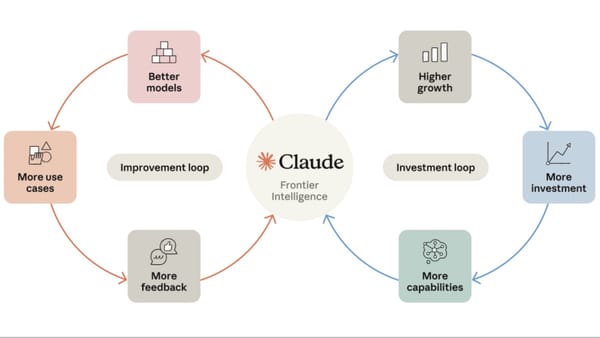
- Anthropic’s S-1 outlines company’s strong financials, methods, and potential risks as it pursues a public offering.
- Google Genie 4 combines with Gemini models to enhance video game design and robotics training, turning world models into playgrounds.
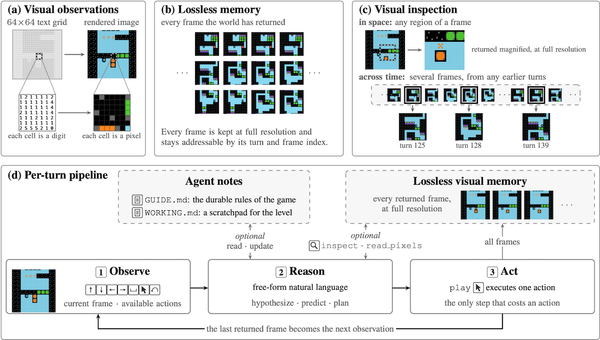
- MIT researchers have developed VISTA, an agent harness that keeps images in memory for faster retrieval, helping bring context engineering to images.
A special event for our community
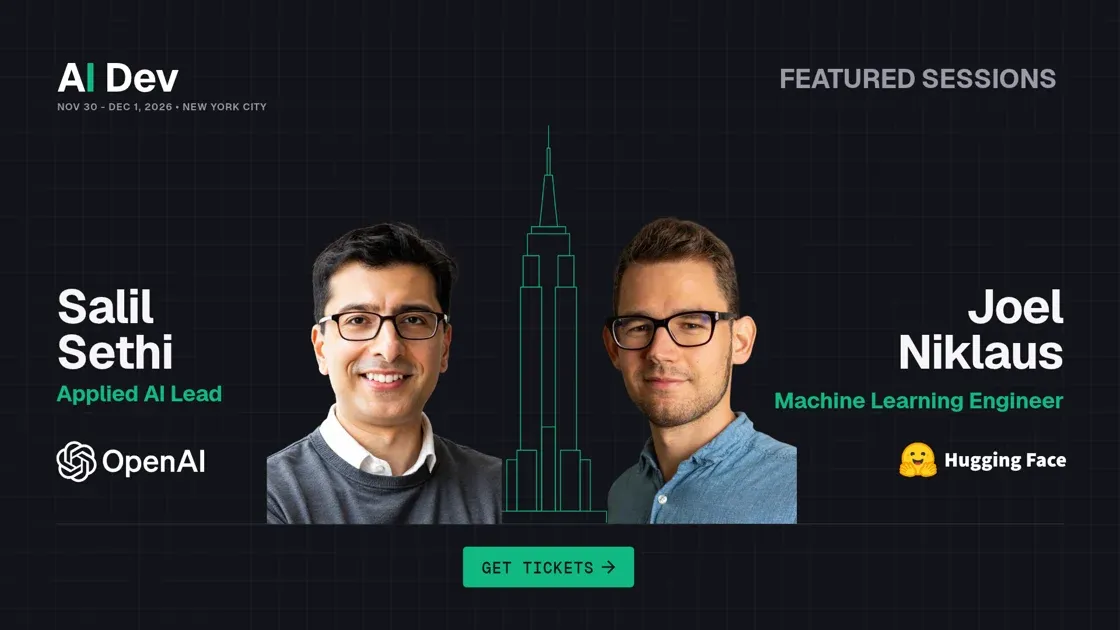
Build your AI engineering skills in person at AI Dev NYC. OpenAI’s Salil Sethi and Hugging Face’s Joel Niklaus will deep dive into building and deploying AI applications, alongside other speakers from Neo4j, Oracle, Sonar, and more.
Data Points is produced by human editors with AI assistance.