Apple sues former partner OpenAI: Meta unveils cost-efficient Muse Spark 1.1
ChatGPT Work wants to handle your work outside the work. IBM’s CodeAlchemy, an enormous synthetic dataset. OpenAI shuts down its Atlas browser. Pangram says AI-aided text is everywhere on social media.

In today’s edition of Data Points, you’ll learn about our top headlines, and more:
- ChatGPT Work wants to handle your work outside the work
- IBM’s CodeAlchemy, an enormous synthetic dataset
- OpenAI shuts down its Atlas browser
- Pangram says AI-aided text is everywhere on social media
But first:
Apple claims OpenAI stole designs, tampered with employees
Apple sued OpenAI on Friday, alleging the AI lab systematically stole trade secrets to develop consumer hardware. The complaint focuses on former Apple employees, particularly Tang Tan—OpenAI’s chief hardware officer and ex-Apple VP—whom Apple accuses of directing job candidates still at Apple to bring actual Apple parts to interviews for “show and tell” sessions. Apple also claims OpenAI coached departing employees on evading security protocols and misled hardware partners into adopting an Apple-invented metal finishing technique. The lawsuit marks a sharp reversal from the companies’ 2024 partnership integrating ChatGPT into iOS, which soured after OpenAI acquired designer Jony Ive’s startup for approximately $6.5 billion and announced hardware ambitions. Apple is seeking damages and an injunction barring OpenAI from using its confidential information. OpenAI denies the allegations and says it has no interest in other companies’ secrets. (CNBC)
Meta announces a strong update to low-priced Muse Spark model
Meta introduced Muse Spark 1.1, a multimodal reasoning model built for agentic tasks, now available through a public preview of the Meta Model API. The model improves substantially on its predecessor in tool use, computer control, coding, and multimodal understanding, and brings a one-million-token context window it can actively manage across extended workflows. Muse Spark 1.1 is especially strong at orchestrating multi-agent systems: It can delegate tasks to parallel subagents, adapt to shifting requirements across applications, and handle complex debugging and feature work in large codebases. It combines coding and visual understanding to enable things like automated screenshot analysis and browser automation, with practical use cases such as marketplace listing creation. Meta’s safety evaluations show it resists jailbreaks and prompt injection while hallucinating less than its predecessor. Early partners including Replit, Cline, and Box have highlighted its ability to handle agentic workloads at scale, pointing to its reasoning quality and cost-effective pricing for production use. (Meta)
OpenAI reveals its Claude Cowork competitor
OpenAI released ChatGPT Work, a cloud-based AI agent that executes tasks across email, calendars, code repositories, and messaging apps without requiring a local machine. It runs on a persistent virtual machine accessible from any device—start a task on your phone and pick it up elsewhere. The agent connects to Gmail, Google Calendar, Slack, and GitHub via MCP-based plugins, with multi-account Gmail support coming soon. The rollout begins with Pro, Enterprise, and Edu users before expanding to Plus and Business tiers. OpenAI product manager Ty Geri says the agent can schedule ten bug bashes simultaneously and compress three months of analytical work into a week. Enterprise customers now account for more than 40 percent of the company’s $2 billion in monthly revenue. ChatGPT Work puts OpenAI in direct competition with Anthropic’s Claude Cowork and Microsoft’s Copilot Cowork, both of which offer similar workplace agents. (VentureBeat)
IBM unveils giant dataset designed to teach models how code works
IBM released CodeAlchemy, a synthetic code dataset containing over 500 billion synthetic tokens plus 350 billion reasoning tokens across 15 programming languages, along with the pipeline used to generate it. The dataset is at least 200 times larger than Wikipedia and includes a noteworthy feature: 1.3 million code files paired with their actual execution traces, a first-of-its-kind pairing designed to teach language models how code behaves at runtime. IBM researchers found that smaller models trained on high-quality synthetic code dramatically outperform those trained on larger volumes of real code. A three-billion-parameter Granite model trained on 100 billion tokens of CodeAlchemy beat the same model trained on 600 billion tokens of real code. The team also found that smaller models produce better synthetic data during the rewriting process, likely because their less-consistent output generates useful diversity. When the Granite 3B model was pre-trained on CodeAlchemy and fine-tuned on additional instructions, it scored a strong-for-its-size 83.5 percent on HumanEval, suggesting the efficiency gains hold even after post-training. (IBM)
OpenAI closes browser experiment, debuts new Chrome extension
OpenAI is shutting down Atlas, the AI browser it launched last October, but it isn’t abandoning web browsing completely. Rather than competing as a standalone browser, OpenAI is folding agentic browsing features into ChatGPT’s desktop app and a new Chrome extension, betting that AI belongs where people already work rather than as a destination product. The move reflects a broader push toward consolidation: after Fidji Simo, OpenAI’s former CEO of applications, pressed the company to cut “side quests,” it has shut down several experimental products including the Sora video tool. The Chrome extension gives ChatGPT access to page context so users can summarize content or ask questions about any website. The desktop app gains a built-in browser for logging into accounts and downloading files, plus a separate cloud browser where AI agents can complete tasks remotely on OpenAI’s servers. The strategy is a quiet admission that, with Perplexity’s Comet, The Browser Company’s Dia, and AI-driven updates from Microsoft and Google, the browser wars heating up across the industry may not need another contender. (TechCrunch)
New analysis suggests social media is being driven by AI
Pangram Labs analyzed over one million social media posts from April through June 2026 and claims that roughly one in four longer posts (those with 250 or more words) were fully AI-generated. LinkedIn raised the most red flags: 41 percent of its longform posts flagged as AI-written, and the platform accounted for nearly two-thirds of all AI content detected despite representing only a third of scanned items. X/Twitter showed a different pattern: Nearly half of its articles contained some AI writing, whether fully generated or AI-assisted. The findings come from Pangram’s Chrome extension, which scans social feeds using the company’s detection algorithm. Reddit was the most AI-free platform at just 4.4 percent AI content overall, though that’s partly because replies, which skew heavily human, made up most of what was scanned there. Top-level Reddit posts hit 11.6 percent, comparable to X/Twitter’s rate. (Pangram Labs)
Want to know more about what matters in AI right now?
Read the latest issue of The Batch for in-depth analysis of news and research.
Last week, Andrew discussed the importance of agentic loops for efficiently building applications from scratch, the value of using coding agents iteratively to refine product specifications, and the goal of treating human input as valuable “gold” in the development process.
“No need to spend an hour of human time mulling over a design spec when an AI agent will spend 20 minutes building a simple prototype; I’d rather spend 10 minutes writing an inferior spec, see what the agent has built, examine its assumptions, and then refine the spec and repeat the process.”
Read Andrew’s letter here.
Other top AI news and research covered in depth:
- Fable’s Return and Fallout describes how Anthropic’s Claude Fable 5 was banned by the U.S. government and its subsequent return to the market.
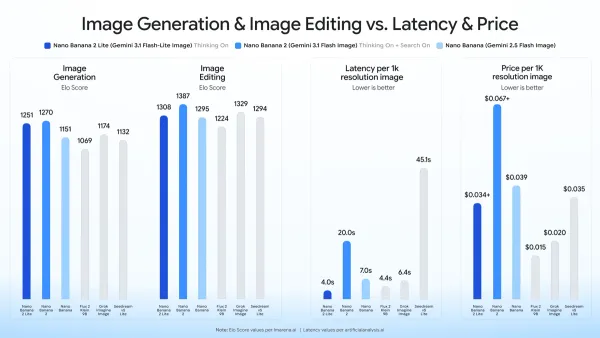
- Google enhances its AI capabilities by pairing its Nano Banana update with Omni Flash’s API, integrating Gemini’s image and video models.
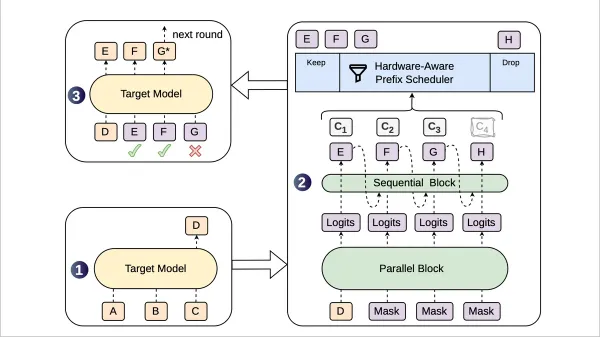
- DeepSeek’s DSpark Gains Velocity as the company open sourced a speculative decoding module that accelerates text generation while maintaining accuracy.
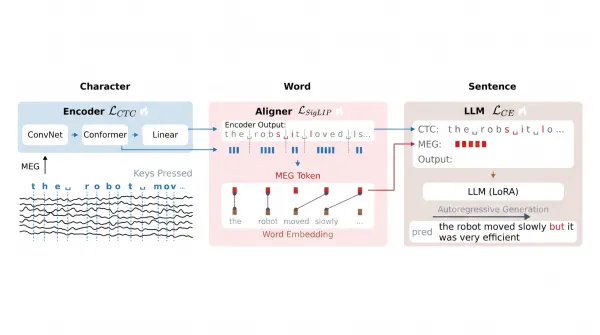
- Text Without Typing highlights how researchers at Meta and other institutions developed Brain2Qwerty v2 to generate sentences directly from brain waves.
A special offer for our community
In case you missed it, DeepLearning.AI launched our first-ever subscription plan for our entire course catalog! As a Pro Member, you’ll immediately enjoy access to:
- Nearly 200 AI short and long courses from Andrew Ng and industry experts
- Labs and quizzes to test your knowledge
- Projects to share with employers
- Certificates to testify to your new skills
- A community to help you advance at the speed of AI
Enroll now to lock in a year of full access for $25 per month paid upfront, or opt for month-to-month payments at just $30 per month. Both payment options begin with a one-week free trial. Explore Pro’s benefits and start building today!
Data Points is produced by human editors with AI assistance.