Meta buys Manus for its agentic tech: Nvidia licenses Groq’s fast inference chips
GLM-4.7, Zhipu’s open-weights reasoning model. Minimax’s M2.1 update ahead of planned company IPO. India’s intervention to restrict Grok’s deepfake nudes. Scientific Context Protocol, a new standard for research agents.

In today’s edition of Data Points, you’ll learn more about:
- GLM-4.7, Zhipu’s open-weights reasoning model
- Minimax’s M2.1 update ahead of planned company IPO
- India’s intervention to restrict Grok’s deepfake nudes
- Scientific Context Protocol, a new standard for research agents
But first:
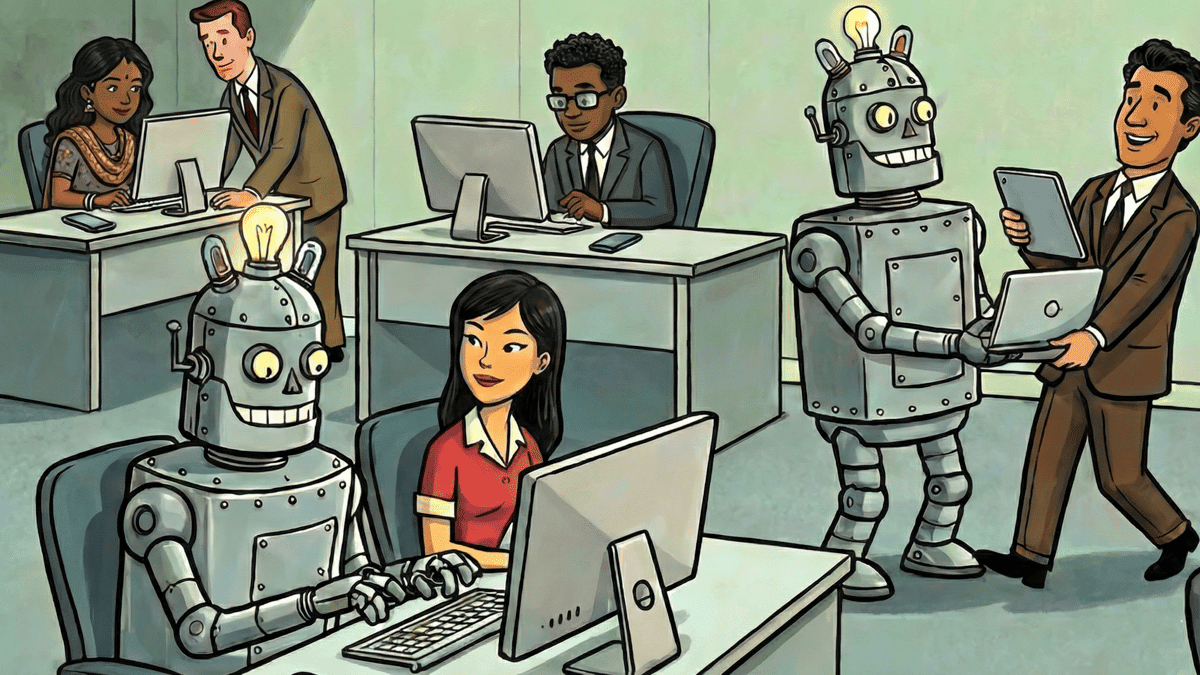
Meta acquires Manus to integrate AI agents across its platforms
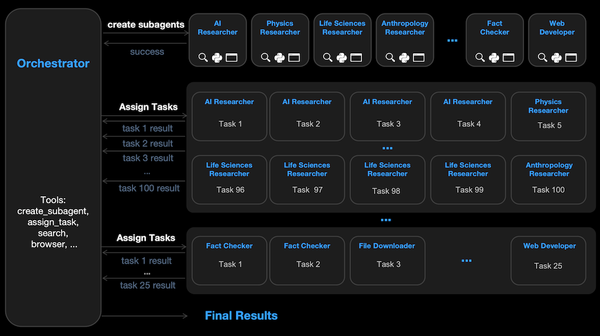
Meta acquired Manus, a Singapore-based company that builds general-purpose AI agents for research, automation, and complex tasks, for over $2 billion. Manus will continue operating independently and selling its subscription service while also integrating its technology into Meta’s products, including Meta AI. Since launching earlier this year, Manus processed over 147 trillion tokens and created more than 80 million virtual computers for millions of users worldwide. The acquisition aims to bring autonomous agent capabilities to Meta’s billions of users and millions of business customers across its platforms. (Manus and Facebook)
Nvidia licenses Groq’s inference technology and hires its leadership team
Nvidia entered a non-exclusive licensing agreement with AI chip startup Groq to incorporate the company’s inference technology into future products. Jonathan Ross, Groq’s founder and CEO, along with president Sunny Madra and other team members, will join Nvidia to help scale the licensed technology. Groq will continue operating independently under new CEO Simon Edwards, and its GroqCloud service will remain operational. The deal follows a pattern among tech giants of licensing technology and hiring key employees rather than acquiring startups outright, a structure that helps avoid regulatory scrutiny. (Groq and The New York Times)
Zhipu AI launches GLM-4.7 with coding and reasoning improvements
Zhipu AI released GLM-4.7, delivering substantial gains over GLM-4.6 in coding, reasoning, and agent tasks. The model achieved 73.8 percent on SWE-bench Verified (up 5.8 percentage points), 66.7 percent on SWE-bench Multilingual (up 12.9 percentage points), and 42.8 percent on Humanity’s Last Exam with tools (up 12.4 percentage points). GLM-4.7 introduces Preserved Thinking, which retains reasoning blocks across multi-turn conversations to reduce information loss in complex tasks, and Turn-level Thinking, which lets developers toggle reasoning on or off per request to balance latency and accuracy. The model is available through Z.ai’s API platform and OpenRouter, works with coding agents including Claude Code and Cline, and can be deployed locally via vLLM and SGLang using weights on HuggingFace and ModelScope. (Z.ai)
MiniMax’s updated M2.1 features improved coding and writing at low cost
MiniMax launched M2.1, an upgraded version of its M2 model that improves code quality, instruction following, and reasoning while maintaining low costs at roughly 8 percent of Claude Sonnet's price. The model scored 72.5 percent on SWE-Multilingual, surpassing Claude Sonnet 4.5 and Gemini 3 Pro across multiple programming languages, and achieved 88.6 percent on VIBE-Bench for app and web development tasks. M2.1 works with major coding tools like Claude Code, Cline, and Roo Code, and includes automatic caching that reduces latency and costs without requiring configuration. The model supports both Anthropic and OpenAI API formats, making integration straightforward for existing workflows. MiniMax designed M2.1 to handle everything from rapid prototyping to production-grade development while producing clearer outputs across conversations, documentation, and writing. (MarkTechPost)
India orders X to moderate Grok to block explicit image generation
India’s IT ministry directed X to immediately block Grok from generating nudity, sexually explicit content, or other unlawful material, giving the platform 72 hours to submit a compliance report. The order followed complaints from users and lawmakers about AI-altered images of women created with Grok, including some showing women in bikinis and others depicting minors in sexualized contexts. X acknowledged lapses in Grok’s safeguards and removed images involving minors, but AI-altered bikini images remained accessible on the platform at press time. The ministry warned that noncompliance could eliminate X’s safe harbor protections under Indian law, exposing the company and its officers to legal liability for user-generated content. (TechCrunch)
Shanghai AI Lab releases open protocol to connect scientific research agents
The Shanghai Artificial Intelligence Laboratory released the Science Context Protocol, an open-source standard designed to connect AI agents, researchers, and lab equipment across institutional boundaries. SCP builds on Anthropic’s Model Context Protocol by adding structured experiment metadata, centralized hub architecture for coordinating multiple agents, intelligent workflow orchestration, and standardized drivers for lab devices. The protocol already supports over 1,600 scientific tools spanning biology, physics, chemistry, and materials science, and enables automated workflows from experimental design through execution and validation. Researchers can deploy their own SCP infrastructure or use the lab’s hosted Intern-Discovery platform to register and share resources. (GitHub)
Want to know more about what matters in AI right now?
Read the latest issue of The Batch for in-depth analysis of news and research.
Last week, Andrew Ng talked about proposing a new Turing-AGI Test to better measure AGI capabilities and address the hype around AI by focusing on its ability to perform work tasks as well as humans.
“Here’s why we need a new test: ‘AGI’ has turned into a term of hype rather than a term with a precise meaning. A reasonable definition of AGI is AI that can do any intellectual task that a human can. When businesses hype up that they might achieve AGI within a few quarters, they usually try to justify these statements by setting a much lower bar.”
Read Andrew’s letter here.
In last week’s special issue, we asked AI luminaries about their highest hopes for 2026:
- Open Source Wins: David Cox, VP for AI Models at IBM Research, emphasized the importance of open development in AI to foster innovation and collaboration.
- AI for Scientific Discovery: Adji Bousso Dieng of Princeton University discussed optimizing AI models to better address niche scientific challenges and the long tail of research.
- Education That Works With — Not Against — AI: Juan M. Lavista Ferres, Chief Data Scientist at Microsoft, discussed assignments that effectively assessed students’ capabilities in an AI-enhanced learning environment.
- From Prediction to Action: Tanmay Gupta of the Allen Institute explored the development of AI systems designed for long-horizon tasks, moving beyond mere prediction.
- Multimodal Models for Biomedicine: Pengtao Xie from UC San Diego highlighted the need for medical models to integrate visual data, from tiny chemicals to large organs, to improve healthcare outcomes.
- Chatbots That Build Community: Sharon Zhou of AMD explored how expanding chatbots to serve groups enhanced community building and interpersonal connections.
A special offer for our community
DeepLearning.AI recently launched the first-ever subscription plan for our entire course catalog! As a Pro Member, you’ll immediately enjoy access to:
- Over 150 AI courses and specializations from Andrew Ng and industry experts
- Labs and quizzes to test your knowledge
- Projects to share with employers
- Certificates to testify to your new skills
- A community to help you advance at the speed of AI
Enroll now to lock in a year of full access for $25 per month paid upfront, or opt for month-to-month payments at just $30 per month. Both payment options begin with a one week free trial. Explore Pro’s benefits and start building today!