Gemini makes Deep Research available via API: Disney and OpenAI form a Sora licensing deal
Nvidia’s Nemotron 3 family of models, including a 30B standout. Microsoft’s RL-powered Agent Lightning. Google’s new Flash voice models and translation agents. “Slop,” 2025’s word of the year.
In today’s edition of Data Points, you’ll learn more about:
- Nvidia’s Nemotron 3 family of models, including a 30B standout
- Microsoft’s RL-powered Agent Lightning
- Google’s new Flash voice models and translation agents
- “Slop,” 2025’s word of the year
But first:
Google releases Gemini Deep Research agent via API for developers
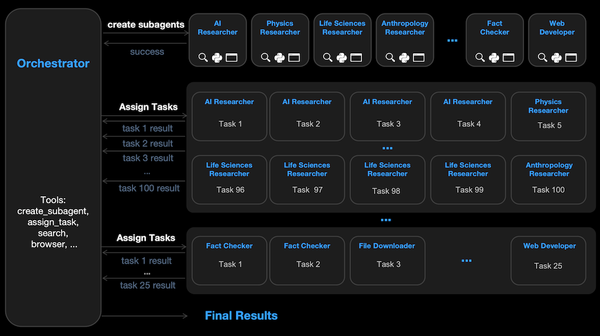
Gemini Deep Research on the Interactions platform allows developers to integrate autonomous research capabilities into their applications. The agent uses Gemini 3 Pro as its reasoning core and iteratively plans investigations by formulating queries, reading results, identifying knowledge gaps, and conducting follow-up searches. It achieved state-of-the-art scores of 46.4 percent on Humanity’s Last Exam, 66.1 percent on DeepSearchQA, and 59.2 percent on BrowseComp. The API supports file uploads in multiple formats, provides granular citations, offers structured JSON outputs, and allows developers to control report structure through prompting. Google also open-sourced DeepSearchQA, a new benchmark with 900 hand-crafted tasks across 17 fields designed to evaluate agents on multi-step research comprehensiveness. (Google)
Disney licenses 200-plus characters for user-generated Sora videos
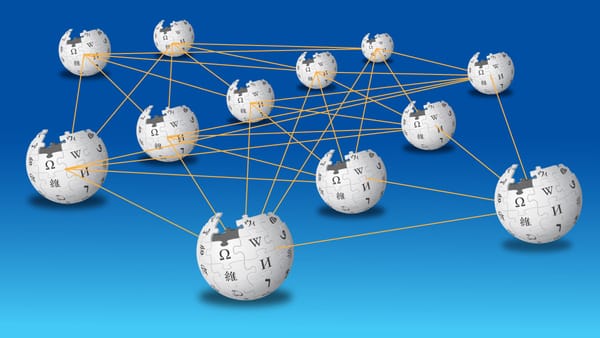
Disney signed a three-year deal allowing OpenAI’s Sora to generate short social videos featuring over 200 characters from Disney, Marvel, Pixar, and Star Wars properties, with ChatGPT Images also gaining access to the same intellectual property. The agreement excludes talent likenesses and voices but includes animated characters, costumes, props, vehicles, and environments. Disney invested 1 billion dollars in OpenAI and will become a major customer, using OpenAI’s APIs to build products for Disney+ and deploying ChatGPT for employees. Curated Sora-generated videos will stream on Disney+, with the service expected to launch in early 2026. (OpenAI)
Nvidia releases open models optimized for multi-agent systems
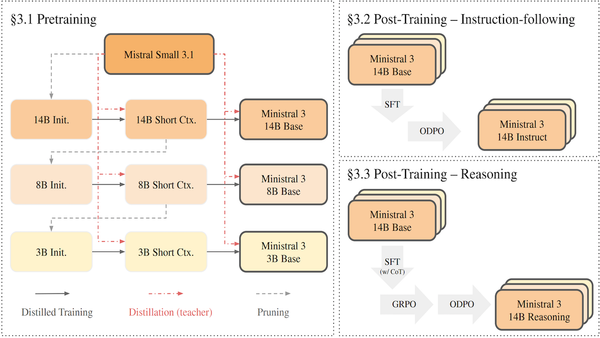
Nvidia launched Nemotron 3 Nano 30B A3B, a hybrid Mamba-Transformer Mixture-of-Experts model with 31.6 billion total parameters and 3.6 billion active per token. The model delivers up to 3.3 times higher throughput than comparable open-weights models while supporting a 1-million-token context window. It uses a sparse MoE architecture with 128 experts, activating six per forward pass, and offers reasoning ON/OFF modes with configurable thinking budgets to control inference costs. Nvidia trained the model on 25 trillion tokens and released the weights, training recipes, datasets totaling 3 trillion new pre-training tokens, and 13 million post-training samples, plus 10 reinforcement learning environments covering 900,000 tasks. The company also open-sourced NeMo Gym, infrastructure for building and scaling RL training environments. The model runs on single H200 GPUs and is available through Hugging Face, OpenRouter, build.nvidia.com, and edge devices including RTX AI PCs. (Hugging Face and Wired)
Agent Lightning lets developers train agents without rewriting code
A Microsoft Research team in Shanghai released Agent Lightning, an open-source framework that adds reinforcement learning capabilities to AI agents with minimal code changes, enabling agents to get better over time. The system treats an agent’s execution as a sequence of states and actions, converting each LLM call into a standardized format that can be used for training. Agent Lightning’s LightningRL algorithm uses hierarchical reinforcement learning to assign rewards to individual LLM requests rather than stitching all content into long sequences, making it compatible with existing single-step RL algorithms like PPO and GRPO while keeping training efficient. Tests on three scenarios (text-to-SQL generation with LangChain, retrieval-augmented generation with OpenAI Agents SDK, and mathematical question answering with AutoGen) showed consistent performance improvements across all tasks. (Microsoft)
Google updates Flash audio model with new voice agents
Google released an updated version of Gemini 2.5 Flash Native Audio focused on live voice agents, with improvements in function calling, instruction following, and multi-turn conversations. The model now scores 71.5 percent on ComplexFuncBench Audio for multi-step function calling and achieves 90 percent adherence to developer instructions, up from 84 percent. Google also introduced live speech-to-speech translation in the Translate app, supporting over 70 languages and 2,000 language pairs while preserving speaker intonation and pitch. The update is available in Google AI Studio, Vertex AI, Gemini Live, and Search Live, with customers like Shopify and United Wholesale Mortgage already deploying it for merchant support and mortgage processing. (Google)
Merriam-Webster names “slop” its word of the year for 2025
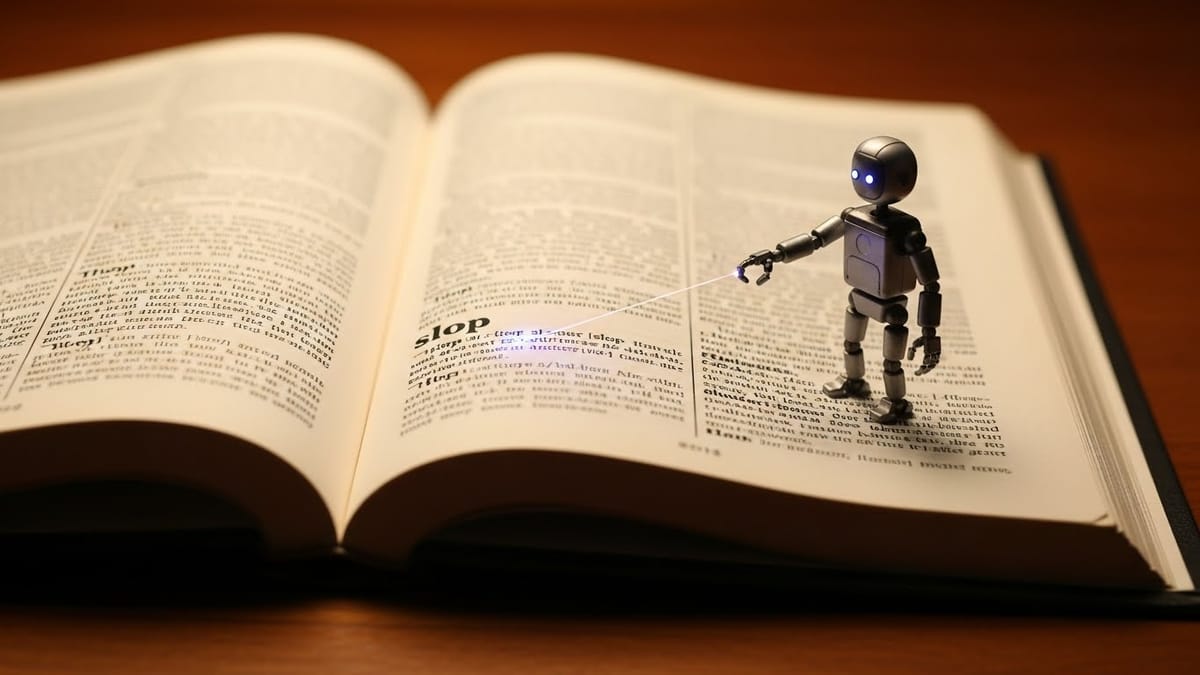
The dictionary publisher chose “slop” to reflect the proliferation of low-quality AI-generated content across the internet. The term, which originally meant soft mud in the 1700s, now describes digital content of little value produced in quantity by artificial intelligence, including fake videos, manipulated images, propaganda, and AI-written books. Recent examples include Defense Secretary Pete Hegseth posting a manipulated image of Franklin the cartoon turtle as a grenade-wielding fighter to defend U.S. military actions in Venezuela. Merriam-Webster president Greg Barlow said the word’s increased search volume suggests people have grown more aware of fake content and desire genuine human creativity instead. (Associated Press)
Want to know more about what matters in AI right now?
Read the latest issue of The Batch for in-depth analysis of news and research.
Last week, Andrew Ng talked about building agentic workflows using a simple recipe with frontier LLMs, the importance of scaffolding for reliable agents, and the aisuite package for easy LLM provider switching and tool usage.
“Aisuite started as a weekend project when I was trying to solve my personal pain point of wanting an easy way to switch LLM providers. After building a workflow using a specific LLM, I often want to quickly try out alternatives to see if they perform better in accuracy, latency, or cost.”
Read Andrew’s letter here.
Other top AI news and research stories we covered in depth:
- Claude Opus 4.5 retook the coding crown at one-third the price of its predecessor and demonstrated efficiency with fewer tokens.
- The White House launched the Genesis Mission to share U.S. data and resources with top AI companies, aiming to accelerate scientific discovery.
- Amazon’s Nova 2 family boosted cost-effective performance and added new agentic features, marking a significant step forward in AI capabilities.
- A tiny recursive model beat larger competitors at games like Sudoku and Maze, showcasing the potential of small models in solving complex puzzles.
A special offer for our community
DeepLearning.AI recently launched the first-ever subscription plan for our entire course catalog! As a Pro Member, you’ll immediately enjoy access to:
- Over 150 AI courses and specializations from Andrew Ng and industry experts
- Labs and quizzes to test your knowledge
- Projects to share with employers
- Certificates to testify to your new skills
- A community to help you advance at the speed of AI
Enroll now to lock in a year of full access for $25 per month paid upfront, or opt for month-to-month payments at just $30 per month. Both payment options begin with a one week free trial. Explore Pro’s benefits and start building today!