Anthropic updates Claude’s founding document: AI companies are obsessed with one video game
LFM2.5-1.2B-Thinking, a smartphone-sized reasoning model. Adobe’s initiative to win over the movie business. Google’s partnership with Japan’s biggest startup. AI companies’ relationship reset with U.S. government.

In today’s edition of Data Points, you’ll learn more about:
- LFM2.5-1.2B-Thinking, a smartphone-sized reasoning model
- Adobe’s initiative to win over the movie business
- Google’s partnership with Japan’s biggest startup
- AI companies’ relationship reset with U.S. government
But first:
Anthropic publishes Claude’s constitution under CC license
Anthropic released the full text of Claude’s constitution under a Creative Commons license. The new approach explains the reasoning behind Claude’s values rather than simply listing rules. The constitution serves as both a philosophical framework and a practical training tool. Claude uses it to generate synthetic training data including conversations, responses, and rankings. The document prioritizes four goals in order: broad safety, ethical behavior, compliance with Anthropic’s guidelines, and genuine helpfulness to users. The company describes the constitution as a living document that will evolve with feedback from external experts and as models become more capable. (Anthropic)
AI labs use Pokémon to test models’ long-term reasoning
Leading AI companies adopted Nintendo’s 1990s Pokémon games as a benchmark for evaluating their models’ ability to pursue complex, long-term goals. Anthropic, OpenAI, and Google run live Twitch streams where their AI models — Claude, GPT, and Gemini — play through the game in real time, collectively drawing hundreds of thousands of viewer comments. The game tests capabilities traditional benchmarks miss: models must navigate mazes, decide whether to train existing Pokémon or catch new ones, and work toward the ultimate goal of defeating gym masters to earn badges. While GPT and Gemini have completed the original game, Claude’s latest version, Opus 4.5, is still attempting it. The exercise also helps developers refine the software infrastructure around AI agents, with Anthropic’s David Hershey applying lessons from the Pokémon project directly to customer deployments. (The Wall Street Journal)
Liquid AI’s tiny reasoning model outperforms other edge AI
Liquid AI released LFM2.5-1.2B-Thinking, a 1.2 billion parameter reasoning model that runs entirely on device and occupies roughly 900 MB on modern smartphones. The model produces structured thinking traces before answers, making it suited for tool use, data extraction, and multi-step problem solving. It achieves 88 on MATH 500 and 86 on GSM8K while using 40 percent fewer parameters than the competing Qwen3-1.7B model. The training pipeline reduced “doom looping,” where models repeat fragments instead of finishing answers, from about 16 percent to 0.4 percent through preference alignment and reinforcement learning with n-gram penalties. The model runs at 239 tokens per second on AMD CPUs and 82 tokens per second on mobile neural processing units, with support for llama.cpp, MLX, and vLLM at launch. (MarkTechPost)
Adobe partners with Hollywood to build generative AI
Adobe rolled out Firefly Foundry, a new AI tool designed to generate images, video, audio, 3D models, and vector graphics that stay true to a brand or franchise’s creative style while remaining commercially safe. The tool aims to bridge the gap between major Hollywood talent agencies, filmmakers, and visual effects studios as the industry grapples with AI’s rapid advancement. High-profile partners backing the offering include talent agencies CAA, WME, and UTA, as well as directors David Ayer and Jaume Collet-Serra and studios like B5 Studios and Promise Advanced Imagination. The launch arrives amid ongoing industry anxiety about AI’s impact on copyright, creator rights, and employment, with guilds preparing for new negotiations with studios and streamers. Adobe noted that 85 percent of films selected for this year’s Sundance Film Festival were created using some of its technology. (Deadline)
Google invests in Japanese startup Sakana AI, forming partnership
Google invested an undisclosed amount in Sakana AI and formed a partnership that gives the Tokyo-based company easier access to Gemini and other Google AI models for product development. The deal allows Sakana AI to deploy its products through Google’s cloud infrastructure for customers with strict security requirements, including financial institutions and government organizations. Sakana AI will continue using models from multiple providers, including OpenAI, while sharing customer feedback with Google to improve model quality. The investment follows Sakana AI’s November 2025 funding round that valued the company at 400 billion yen (2.25 billion dollars), making it Japan’s highest-valued unlisted startup. (Nikkei)
AI companies see U.S. lobbying boost pay off
Silicon Valley’s largest technology and AI firms spent 109 million dollars on lobbying in 2025, surpassing 100 million for the first time, as executives seek favorable policies on AI regulation, trade, and industrial strategy under President Donald Trump. Nvidia shows the strategy’s potential payoff: After increasing lobbying spending to $4.9 million from $640,000 the previous year, the chip manufacturer won approval to resume exports of its H200 AI chips to China despite national security concerns, following repeated engagement between CEO Jensen Huang and Trump administration officials. Meta led all tech companies with over $26 million in lobbying spending, while Amazon and Google each exceeded $13 million, and OpenAI significantly expanded its Washington operations to secure support for large-scale AI infrastructure projects. Apple secured tariff relief after committing $600 billion to domestic manufacturing, illustrating the transactional nature of corporate-government dealmaking. Future policy risks for AI firms include legislative efforts to restrict chip exports, rising tariff-driven prices, and conflicts between federal and state AI regulations. (Yahoo)
Want to know more about what matters in AI right now?
Read the latest issue of The Batch for in-depth analysis of news and research.
Last week, Andrew Ng talked about the need for businesses to redesign workflows to achieve transformative impacts with AI, rather than just incremental efficiency gains, and highlighted discussions at the World Economic Forum on topics like Agentic AI, Sovereign AI, and talent challenges.
“A recurring theme of these conversations is that running many experimental, bottom-up AI projects — letting a thousand flowers bloom — has failed to lead to significant payoffs. Instead, bigger gains require workflow redesign: taking a broader, perhaps top-down view of the multiple steps in a process and changing how they work together from end to end.”
Read Andrew’s letter here.
Other top AI news and research stories covered in depth:
- OpenAI tested advertisements for U.S. ChatGPT users in free and lower-cost tiers, marking a significant shift in its monetization strategy.
- Nvidia introduced Alpamayo-R1, a robotics-style reasoning model designed to enhance the decision-making capabilities of autonomous vehicles.
- Apple announced that its foundation model of choice would be Gemini, partnering with Google to enhance Siri and other AI-driven features.
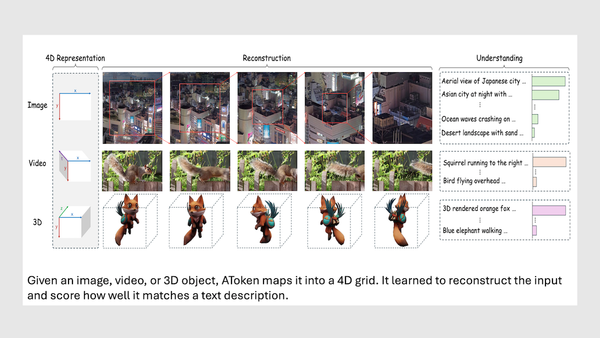
- FlashWorld generated 3D objects, scenes, and surfaces with photorealistic fidelity, advancing the capabilities of text- or image-to-3D conversion.
A special offer for our community
DeepLearning.AI recently launched the first-ever subscription plan for our entire course catalog! As a Pro Member, you’ll immediately enjoy access to:
- Over 150 AI courses and specializations from Andrew Ng and industry experts
- Labs and quizzes to test your knowledge
- Projects to share with employers
- Certificates to testify to your new skills
- A community to help you advance at the speed of AI
Enroll now to lock in a year of full access for $25 per month paid upfront, or opt for month-to-month payments at just $30 per month. Both payment options begin with a one week free trial. Explore Pro’s benefits and start building today!